




Obesity
Latest News
Advertisement
Latest Videos


Advertisement
More News

The results show that semaglutide could be a novel treatment for patients with alcohol use disorder moving forward.
Oral semaglutide hasn't shifted prescribing as expected. Shawn Davis, MD, discusses what access and policy changes are needed to close the coverage gap.
Tim Church, MD, PhD, MPH, explains that access to care—not willpower—is the central barrier to GLP-1 use, and says employer coverage decisions are finally catching up.

A 2026 survey finds 2 in 3 employed adults would be more likely to use GLP-1 weight-loss drugs if employer coverage or behavioral support programs were available.
With obesity costing $1.4 trillion annually, Shawn Davis, MD, argues the return on treatment investment is clear if we build systems to measure it.
Shawn Davis, MD, explains why shifting from BMI to adiposity-based care could transform how health systems allocate resources and reduce obesity-driven hospital costs.

This retrospective analysis examines employees with obesity and reports on glucagon-like peptide-1 receptor agonist use, comorbidities, and work outcomes over time.
FDA approves Eli Lilly's orforglipron (Foundayo), the first GLP-1 obesity pill with no food or water restrictions.
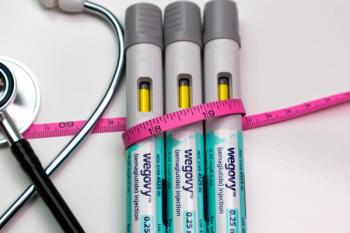
Novo Nordisk launches a Wegovy subscription program to reduce costs, expand access, and improve long-term adherence.

Analysis of billing codes before and after implementation of a care process for weight-focused visits revealed increased primary care revenue for these encounters.

Obesity enlarges organs, adding cells that raise liver, kidney, and pancreatic cancer risk, such that organ size may predict danger better than body mass index.

"The One Hundred Year Effect," a documentary about retired Oregon Health and Science Professor Kent Thornburg, PhD, and his efforts to spread the message of the harms of chronic disease, recently premiered.

The FDA approved higher-dose semaglutide 7.2 mg (Wegovy HD), marking the fourth drug approved under the Commissioner's National Priority Voucher pilot program.

The Go for Bold initiative, which aims to help individuals in Washington County, Maryland, lose 1 million lb by 2030, serves as a successful, replicable model for community-wide health improvement.
In a cohort of US veterans, there were reduced risks of adverse clinical outcomes in people with SUDs and of developing an SUD in those taking GLP-1s.
FDA approves 4-dose KwikPen for tirzepatide (Zepbound; Eli Lilly), offering a full month of weight management treatment in 1 device.

New GLP-1 pills challenge injections as competition, and discussions of possible Medicare coverage could push prices down.
Oral Wegovy reshapes GLP-1 costs: cash pay can be cheaper, insurance pricing often matches shots, and coverage hinges on employer benefits and coding.

City leaders share real-world GLP-1 coverage tactics, showing how public employers balance access, costs, and lasting weight-management outcomes with data-driven oversight.
Oral GLP-1 costs, insurance gaps, and formulary switches reshape drug pricing and access—learn how to navigate coverage.

Individuals can use these 5 ways to minimize their cancer risk during National Cancer Prevention Month and beyond.
To protect patients, the FDA will restrict ingredients in unapproved compounded GLP‑1 drugs and crack down on misleading marketing.

Oral semaglutide (Wegovy; Novo Nordisk) expands GLP-1 weight-loss options, but pharmacy budgets and health care cost pressures persist.
Oral Wegovy shifts GLP-1 obesity costs: insurance may match injectables, while cash-pay and pharmacy platforms unlock lower prices and aid programs.
Obesity market overview for employers: data on GLP-1s for obesity, digital solutions, and benefit strategies to control costs and outcomes.
Advertisement
Advertisement
Trending on AJMC
1
Coroner Reports Pennsylvania's Sixth Measles-Associated Death
2
CMS Rule Ends Medicaid, CHIP Funding for Pediatric Gender Care
3
MedHaul Closes Care Gaps With Single Stop for Getting Patients to Appointments
4
FDA Approves First Treatment for BCG-Unresponsive Bladder Cancer
5