



Oncology
Latest News
Advertisement
Latest Videos


Shorts

0:43
Stopping the Exodus of Women Physicians: Bhavana Bhatnagar, DO
2 months ago
by
Bhavana (Tina) Bhatnagar, DO(+1 more)

1:49
Metastatic Cancer Drives Higher Medicaid Spending Across Payment Models: Anuraag R. Kansal, PhD
2 months ago
by
Brooke McCormick(+1 more)

1:13
Rethinking When and How to Use CAR T in ALL: Nitin Jain, MD
2 months ago
by
Maggie L. Shaw(+1 more)

0:55
CD19, a Smart Target With a Trade-Off: Martin Schrappe, MD, PhD
3 months ago
by
Maggie L. Shaw(+1 more)

0:32
How SkinIO's Full Body Scan Caught Melanoma: Steve Bonner
3 months ago
by
Giuliana Grossi

0:32
Paving the Way to a Myeloma Cure: Ajay K. Nooka, MD, PhD
3 months ago
by
Maggie L. Shaw(+1 more)
0:46
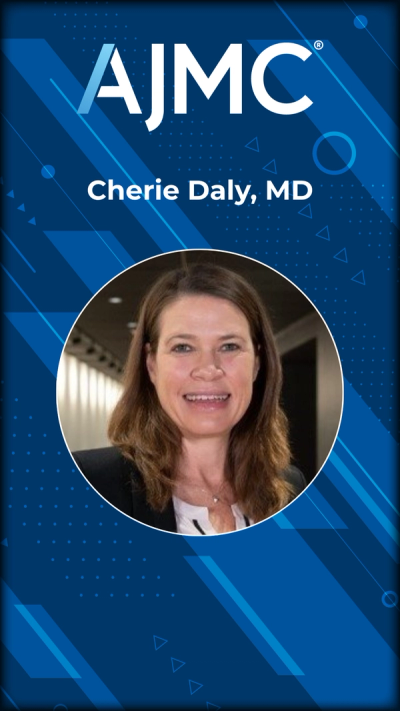
Supporting Families Requires Recognizing the Full Financial Impact of Pediatric Cancer: Cherie Daly, MD
3 months ago
by
Brooke McCormick(+1 more)

1:57
Policy, Technology Misalignment Slows NSCLC Genomic Testing: Robert Kratzke, MD
3 months ago
by
Brooke McCormick(+1 more)
0:41
Human-Centered Approach Needed to Reduce Pediatric Cancer Financial Toxicity: Danielle Fragalla, MSE
3 months ago
by
Brooke McCormick(+1 more)
0:51
How the OCM Reshaped Oncology Practice Conversations: Kathy Oubre, MS
4 months ago
by
Maggie L. Shaw(+1 more)
Podcasts

Advertisement
More News
In part 2, Christine Pfaff, RPh, MBA, explores reimbursement gaps, new payment models, and payer partnerships needed to expand cellular therapy access.

Oncologists say advances in testing and treatment are outpacing staffing, pay, and access.
In part 2, Rosa Novo discusses how employers can expand access to cancer screening and why they need a greater voice in shaping cancer care.
AI could ease oncology's drug development "traffic jam," while biomarker subsetting drives more personalized cancer care, David Spigel, MD, says.
Amanda Green, MPH, discusses how employers can improve benefit awareness, care navigation, cancer prevention, and cost strategies.
CDC's David A. Siegel, MD, MPH, on rising cancer diagnoses, falling deaths, and where CDC's cancer control resources go next.
Advanced primary care, return-to-work support, and survivorship follow-up are key employer cancer strategies, said Karen van Caulil, PhD.
CDC's Jane Henley, MSPH, explains what's behind falling lung cancer deaths and why 4 in 5 eligible adults still aren't getting screened.

Community oncologists cited prior authorization as a care barrier, even as AI adoption doubled in 2026, according to the Oncology Care Index.

Community oncology faces high costs and staffing hurdles for trials; Lucio N. Gordan, MD, urges pragmatic designs matching real-world patients.
In part 2, David Johnson, MD, MPH, discusses how real-time data can sustain gold carding, ease prior authorization burden, and ensure accountability.

Payers say NCCN guideline concordance sets a baseline for cancer coverage, but cost and formulary variation may still limit access.
Liquid biopsy and at-home phlebotomy are closing precision medicine access gaps nationwide, though tissue remains the gold standard.

The FDA has approved belzutifan plus lenvatinib for advanced ccRCC after PD-1/PD-L1 therapy, expanding treatments for those with disease progression.
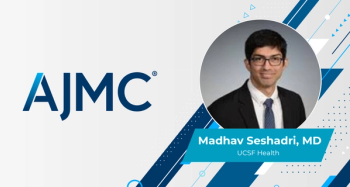
Madhav R. Seshadri, MD, speaks on CLL's shift toward fixed-duration, MRD-guided regimens, MRD testing barriers, and open questions on drug sequencing.

Accelerated approvals, surrogate end points, and high drug costs are reshaping cancer center formulary decisions, explained panelists at PCOC.
Karen van Caulil, PhD, explained why employers evaluating cancer care weigh timely access, quality, and equity alongside cost.
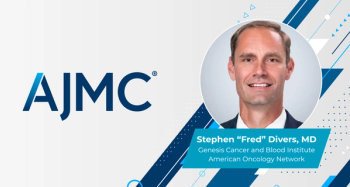
Stephen "Fred" Divers, MD, discusses how COA study data push back on payer bias and support community oncology's long-term sustainability.
Physicians to Discuss 2026 Oncology Care Index at Patient-Centered Oncology Care®, Premier Annual AJMC® Event Starting Today in Nashville | 60% of Community Physicians Say Clinical Trial Options Are Limited; 93% Say Pragmatic Designs Would Help

Across 29,132 surgically treated T1 cases, lymph node metastasis hit 19.2% under age 50 vs 11.1% at 50 and older.
David Johnson, MD, MPH, discusses how payer data can reduce low-value cancer care and steer patients to supportive services and cost-efficient sites.
Stephen “Fred” Divers, MD, discusses findings showing community oncology delivers outcomes comparable with academic care for breast cancer and NSCLC.
Stephen "Fred" Divers, MD, previews PCOC 2026, including his session on the Oncology Care Index and the gap in AI adoption in oncology.

CDC data show cancer deaths declining as lung cancer treatment and detection advance, with new KRAS-targeted therapies showing early promise.
Christine Pfaff, RPh, MBA, discusses barriers to community cellular therapy delivery and the need for new business models and payer collaboration.
Advertisement
Advertisement
Trending on AJMC
1
5 Things to Know About the One Big Beautiful Bill Act
2
Coroner Reports Pennsylvania's Sixth Measles-Associated Death
3
ACA Subsidies End for 189,000 Duplicate or Deceased Enrollees
4
Medicaid Obesity GLP-1 Coverage May Offset Some Diabetes-Labeled Use
5