





Oncology
Latest News
Advertisement
Latest Videos








Advertisement
More News

Matthew Callister, MD, Banner Health, discusses the advantage of value-based oncology care as a platform for collaboration.

In part 3 of our interview, Jessica K. Paulus, ScD, Ontada, addresses the importance of understanding data sources and their impact on clinical research.
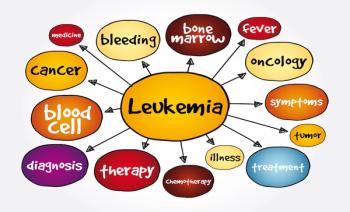
Only about 1% of patients with chronic lymphocytic leukemia (CLL) developed an invasive fungal infection while on a Bruton’s tyrosine kinase (BTK) inhibitor, investigators found.

A study finds limited changes in hospice utilization, highlighting challenges in real-world implementation.

The National Comprehensive Cancer Network (NCCN) survey finds 89% of centers continue to report shortages for at least one type of systemic therapy.

Early findings from a new preclinical study indicate that dual blockade of aurora-A kinase and PD-L1 signaling can inhibit tumor growth in triple-negative breast cancer (TNBC), treatment for which has historically remained limited.
“The screening victory there is going to take some more time to show its benefit at the population level,” notes Jessica K. Paulus, ScD. “Some of these things are just going to be reductions in mortality that we have to wait to observe over time.”
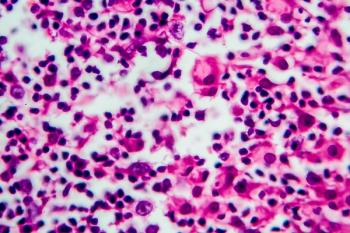
The treatment regimen not only significantly improved progression-free survival (PFS) for patients with advanced stage classic Hodgkin lymphoma but was also better tolerated compared with a 20-year-old regimen being used.

In part 3 of an interview, MD Anderson’s Ravin Ratan, MD, MEd, discusses neoadjuvant immune checkpoint blockade for 2 specific types of soft tissue sarcomas.



Investigators from Germany conducted a systematic review of different MRI features in soft tissue sarcoma (STS) that are used to infer tumor histological grade.

Neurotrophic tyrosine receptor kinase (NTRK)–positive locally advanced or metastatic solid tumors can now be treated with the first FDA-approved treatment option.

Nivolumab/cabozantinib combination therapy showed consistent benefits across various subgroups in patients with advanced renal cell carcinoma (RCC).

Judge rules Florida's ban on gender-affirming care for minors unconstitutional; first consensus definition for long COVID aims to standardize diagnosis and care; pilot program for clinical trial diversity discontinued due to high cost and lack of impact.

Emily Touloukian, DO, medical oncologist, practice president, and managing partner at Coastal Cancer Center, discusses the importance of patient advocacy when it comes to current issues such as drug shortages and mail order restrictions.

Posters presented at ASCO 2024 found positive responses in the prediction of tumor types and prognostic outcomes in patients with advanced solid tumors and HR+/HER2-negative (HER2–) metastatic breast cancer.

A urologist discusses the prospective advantages of the novel gene therapy nadofaragene firadenovec compared to standard-of-care therapies for patients with BCG-unresponsive non-muscle-invasive bladder cancer (NMIBC) and highlights the significance of the reported 5-year bladder preservation and overall survival rates.
Neal Shore, MD, FACS, describes the patient population and treatment regimen evaluated in the NURE-COMBO phase 2 trial of neoadjuvant nivolumab plus nab-paclitaxel followed by adjuvant nivolumab in muscle-invasive bladder cancer (MIBC), and discusses the key efficacy results of pathologic complete response and major pathologic response rates.


Many US dairy farms have not yet increased bird flu protections for employees despite the outbreak in cows; the human papillomavirus (HPV) vaccine is linked to a drastic reduction in head and neck cancers in adolescent boys and men; the World Health Organization recently accused tobacco companies of actively trying to hook a new generation on nicotine.



Advertisement
Advertisement
Trending on AJMC
1
5 Things to Know About the One Big Beautiful Bill Act
2
Coroner Reports Pennsylvania's Sixth Measles-Associated Death
3
Medicaid Obesity GLP-1 Coverage May Offset Some Diabetes-Labeled Use
4
FAQ: How Payers Can Close HIV Prevention and PrEP Access Gaps
5