





Oncology
Latest News
Advertisement
Latest Videos



Advertisement
More News

First-Line Tislelizumab Plus Chemotherapy Approved in ESCC Expressing PD-L1
Published: | Updated:
Tislelizumab plus chemotherapy received FDA approval as a frontline therapy for individuals with unresectable or metastatic esophageal squamous cell carcinoma (ESCC) whose tumors express PD-L1.

Some patients are better candidates than others for histotripsy to treat liver tumors, but ultimately, this treatment still requires a good multidisciplinary team, like any cancer treatment, said Shaun P. McKenzie, MD, FACS.

Karen Winkfield, MD, PhD, addresses the importance of inclusive clinical trial participation and meeting patients where they are.
Histotripsy shows promise for treating liver tumors with minimal adverse effects, but limited long-term data and insurance hurdles hinder its adoption, says Shaun P. McKenzie, MD, FACS, of Texas Oncology.

When combined with chemotherapy, cetuximab shows promising efficacy for optimizing treatment strategies for patients with metastatic colorectal cancer.

Health care institutions with large numbers of Medicare and Medicaid patients may be constrained from offering cancer therapies made available under the accelerated approval pathway.

The Southern Rural Black Women’s Initiative for Economic and Social Justice works to overcome race, class, cultural, religious, and gender barriers that Black women and young women face in the rural South, specifically the Mississippi Delta and the Black Belt regions of Alabama and Georgia.
Although histotripsy can successfully destroy tumors in the liver, longer-term data are still needed to see recurrence rates and overall survival, said Shaun P. McKenzie, MD, FACS, a surgical oncologist with Texas Oncology.

Eligibility issues, a need for better multidisciplinary collaboration, and a lack of incorporation in community practices are all barriers to the use of neoadjuvant chemotherapy followed by surgery for patients with primary urethral cancer, said Rohan Garje, MD.
Susan Escudier, MD, FACP, discusses the impact of insurance coverage gaps, transportation barriers, and financial hardships on cancer care access and emphasizes the need for payers to better support patients at high risk.
Accurate calculation of prostate-specific antigen doubling time can be crucial for prostate cancer treatment decisions but is often missed by doctors, impacting patient care.

In the wake of novel bispecific and chimeric antigen receptor T-cell therapies for various cancers, geography still plays a big role in patients' abilities to receive such treatments.
In part 3 of this conversation, Karen Winkfield, MD, PhD, executive director of the Meharry-Vanderbilt Alliance, discusses why basic scientific research remains essential and how patient experiences contribute.

Black individuals had a 2-fold risk of cancer death related to prostate, myeloma, and stomach cancers compared with White individuals.


When added to chemotherapy, researchers found no significant difference in overall or progression-free survival between PD-1 and PD-L1 inhibitors.
Susan Escudier, MD, FACP, explains some of the ways Texas Oncology mitigates financial toxicity and improve clinical trial access for underserved patients.

Powles Highlights “Transformative” Benefit of EV Plus Pembro While Sharing Long-Term Data for EV-302
The lead investigator for EV-302 said not long ago, survival of 12 to 14 months in this type of bladder cancer was considered an achievement; in this study, median overall survival was 34 months after treatment with enfortumab vedotin (EV) and pembrolizumab (pembro).
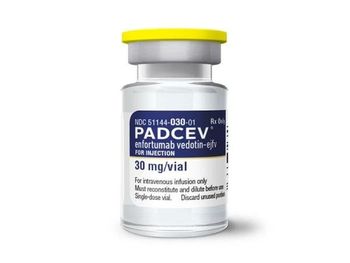
City of Hope's Salvador Jaime-Casas, MD, discusses a systematic review of recent trials examining objective response rate and adverse events of antibody-drug conjugate (ADC) combinations in advanced urothelial cancer.
Enfortumab vedotin with or without pembrolizumab offers disease control benefits for patients with upper tract urothelial cancer, said Evangelia Vlachou, MD, of Johns Hopkins Medicine.
Receiving NADT for 6 Months Doesn’t Impact Outcomes in Intermediate-Risk Prostate Cancer After EBRT
Published: | Updated:
Adding 6 months of neoadjuvant deprivation therapy (NADT) doesn’t seem to add any benefit for patients with intermediate-risk prostate cancer treated with external-beam radiation therapy (EBRT), according to 15-year outcomes presented by Barry Goy, MD, of Kaiser Permanente.
Health systems are facing hurdles to implementing new and effective metastatic urothelial carcinoma (mUC) therapies into practice due to high costs and a lack of targeted initiatives to aid health care providers with integration.

Data on enfortumab vedotin plus pembrolizumab for advanced bladder cancer, along with updates on antibody-drug conjugates, biomarkers, and other cancer treatments, will be highlighted at the American Society of Clinical Oncology Genitourinary Cancers Symposium (ASCO GU).

“To error is human, and also to error is in machine learning,” said Debra Patt, MD, PhD, MBA, MPH.

These new data highlight the need for improved pain management among patients with cancer and survivors.
Advertisement
Advertisement
Trending on AJMC
1
5 Things to Know About the One Big Beautiful Bill Act
2
Coroner Reports Pennsylvania's Sixth Measles-Associated Death
3
Medicaid Obesity GLP-1 Coverage May Offset Some Diabetes-Labeled Use
4
FAQ: How Payers Can Close HIV Prevention and PrEP Access Gaps
5