



Oncology
Latest News
Advertisement
Latest Videos





Advertisement
More News

Making clinical trials easier to find for clinicians and making protocols for entering clinical trials more lenient can help to improve access to clinical trials on a national and local level, explains Eric Lander, MD, of Minnesota Oncology.

Median overall survival was 5 months longer in patients with small cell lung cancer (SCLC) who received tarlatamab instead of chemotherapy after progression following platinum-based chemotherapy.

A teledermatology program in Georgia helped identify patients with skin lesions that warranted in-person follow-up with a physician.

Pharmacists are being asked to not only manage medications and side effects but also be fiscally responsible for the whole institution and its trickle-down effect on costs, said David Awad, PharmD, BCOP, of Robert Wood Johnson University Hospital.

Andrew Evens, DO, MBA, MSc, deputy director for clinical services and chief physician officer, Rutgers Cancer Institute, introduces New Jersey's new state-of-the-art facilities at the Jack & Sheryl Morris Cancer Center.

The role that artificial intelligence (AI) and other technology can play in care delivery is growing, said Coral Omene, MD, PhD, of Rutgers Cancer Institute and RWJBarnabas Health.

Cemiplimab improved disease-free survival in patients with high-risk cutaneous squamous cell carcinoma (CSCC) and performed well in patients with advanced CSCC in the real-world setting.

The FDA has granted approval to pembrolizumab for the treatment of adult patients with resectable, locally advanced HNSCC whose tumors express PD-L1 with a CPS of ≥1.

The FDA approved mitomycin intravesical solution (Zusduri) for patients with recurrent low-grade intermediate risk non–muscle-invasive bladder cancer (NMIBC).
Effective toxicity management in oncology requires pharmacists to document interventions clearly and collaborate closely with multidisciplinary teams, says David Awad, PharmD, BCOP.
A private oncology shared savings plan reduced colon cancer treatment costs. Results varied by tumor, with none in breast cancer and mixed effects in lung cancer.
Collecting comprehensive patient data, including social determinants of health, is crucial for equitable value-based cancer care, yet administrative burdens could worsen existing disparities, said Coral Omene, MD, PhD, of Rutgers Cancer Institute and RWJBarnabas Health.
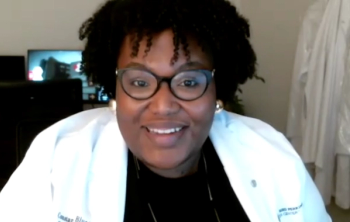
Constance Blunt, MD, medical oncologist, Mary Bird Perkins Cancer Center, discusses the potential consequences of losing free health care screening coverage.
Defining "value" in cancer care goes beyond survival and should encompass patient quality of life metrics, said Coral Omene, MD, PhD, of Rutgers Cancer Institute and RWJBarnabas Health.

The findings are notable in part because therapies have already been approved to target C5aR1 in other diseases.

The findings provide insight into which patients may have favorable or inferior responses to immunotherapy for small cell lung cancer (SCLC).

Structured exercise programs should be a part of the standard of care for colon cancer following adjuvant chemotherapy, authors of the CHALLENGE study recommended.

Rising early-onset colorectal cancer rates among young adults highlight the urgent need to explore lifestyle, genetics, and environmental factors driving this trend.
David Awad, PharmD, BCOP, says pharmacists play a growing role in managing access, safety, and toxicity for these therapies, ensuring treatments are appropriate and sustainable in real-world oncology practice.
In May, the FDA granted significant drug approvals across various therapeutic areas, marking notable progress in expanding treatment options for patients.
Insurance hurdles in value-based cancer care create delays and anxiety for patients and providers, complicating access to essential treatments, explained Coral Omene, MD, PhD, of Rutgers Cancer Institute and RWJBarnabas Health.

Leaders in oncology share why the American Society of Clinical Oncology (ASCO) meeting remains a top global gathering for breakthroughs, networking, and lifelong learning.
Constance Blunt, MD, medical oncologist, Mary Bird Perkins Cancer Center, shares how one mobile health care initiative is addressing critical barriers to medical access for underserved populations.

Darolutamide (Nubeqa) is granted FDA approval for metastatic castration-sensitive prostate cancer, enhancing survival and quality of life for patients.
Men’s Health Month 2025 encourages men to adopt preventive care and healthy lifestyle habits to improve overall health outcomes.
Advertisement
Advertisement
Trending on AJMC
1
5 Things to Know About the One Big Beautiful Bill Act
2
Coroner Reports Pennsylvania's Sixth Measles-Associated Death
3
Medicaid Obesity GLP-1 Coverage May Offset Some Diabetes-Labeled Use
4
FAQ: How Payers Can Close HIV Prevention and PrEP Access Gaps
5