





Oncology
Latest News

Advertisement
Latest Videos




Advertisement
More News

Only about 2% of cases of rhabdomyosarcoma primarily arise from the chest wall, and such cases require careful planning.

Global ovarian and uterine cancer cases due to high BMI have risen sharply over the past 30 years, especially in low- to middle-income sociodemoraphic regions.

Oncology experts at PCOC 2025 discuss breakthrough therapies, AI-driven care, and evolving care delivery models shaping the future of oncology.

Speakers at AMCP Nexus 2025 reviewed the oncology pipeline, highlighting expanded indications and new therapies advancing innovation, access, and value.

Using artificial intelligence (AI) to specialize treatment for patients with different kinds of cancer can be a boon to clinicians looking to personalize their care.
New methods of testing tissue and plasma beyond next-generation sequencing (NGS) could be used to deliver the best therapeutic options for patients with cancer.

Immunotherapy's Evolving Role in Ovarian Cancer: Nicoletta Colombo, MD, PhD
Published: | Updated:
Nicoletta Colombo, MD, PhD, of the University of Milan-Bicocca, discussed the rationale behind paclitaxel with bevacizumab and pembrolizumab in ovarian cancer.

New reporting suggests obesity and diffuse large B-cell lymphoma (DLBCL) have shared genetic risk factors.

Treatment options for patients with small cell lung cancer (SCLC) who survive to a third line of therapy are insufficient, authors of a new study argue.

Susan Escudier, MD, FACP, of Texas Oncology, suggests actionable insights to improve equitable access to patient cancer care

Payer contracts should incentivize the delivery of comprehensive, total-person cancer care, says Brian Mulherin, MD.

Many cancer survivors face ongoing physical and mental health challenges, which peer support and online resources can help address, says Brian Koffman, MDCM, DCFP, FCFP, DABFP, MSEd.
Despite systemic challenges, oncology practices use value-based care, community partnerships, and clinical trials to improve patient access and outcomes, says Brian Mulherin, MD.

Vivek Subbiah, MD, says artificial intelligence (AI) should assist clinicians in precision oncology, not replace human decision-making.

Artificial intelligence, automation, and expanded pharmacist roles help reduce administrative burdens, improve workflow, and support providers in delivering cancer care, according to Scott Soefje, PharmD, MBA, BCOP.
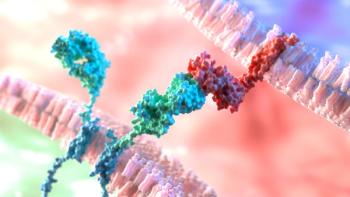
Early research has identified several antigens that could help facilitate the use of chimeric antigen receptor T cells in small cell lung cancer.

Emotional well-being and social engagement significantly impact quality of life for patients with soft tissue sarcoma post-surgery.
Scott Soefje, PharmD, MBA, BCOP, discusses how remote patient monitoring and caregiver support enable safe outpatient delivery of bispecific antibodies and antibody-drug conjugates.

Stronger partnerships between primary care and oncology improve patient outcomes by ensuring coordinated care and addressing financial and systemic barriers, says Mark Fendrick, MD.

Reducing data silos and boosting transparency in oncology requires payer-provider trust and co-governance, according to Vishnukamal Golla, MD, MPH.
Although overall costs have not declined with the Oncology Care Model (OCM), supportive care costs have decreased through greater use of cost-effective therapies.
Vivek Subbiah, MD, considers artificial intelligence (AI) and comprehensive somatic and germline testing essential for guiding precision oncology and improving patient care.
Oncology pharmacists now work alongside providers to improve efficiency, patient education, and treatment outcomes, according to Scott Soefje, PharmD, MBA, BCOP.

Biomarkers like neutrophil-to-lymphocyte ratio could help predict treatment response to immune checkpoint inhibitors in certain patients with soft tissue sarcoma.

Second primary malignancies in patients with small cell lung cancer are often misdiagnosed as distant metastases.
Advertisement
Advertisement
Trending on AJMC
1
5 Things to Know About the One Big Beautiful Bill Act
2
Coroner Reports Pennsylvania's Sixth Measles-Associated Death
3
Medicaid Obesity GLP-1 Coverage May Offset Some Diabetes-Labeled Use
4
FAQ: How Payers Can Close HIV Prevention and PrEP Access Gaps
5