
Opinion|Videos|May 14, 2025
Airway Clearance Techniques and Antibiotics for Patients With Bronchiectasis
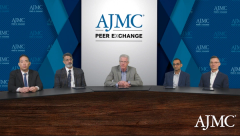
Panelists discuss how airway clearance devices and techniques, including chest physical therapy, active cycle breathing, exercise, hypertonic saline, and oscillatory positive expiratory pressure devices, are the mainstay of bronchiectasis management.
Advertisement
Episodes in this series
Clinical Brief: Airway Clearance Techniques in Bronchiectasis Management
Main Discussion Topics
- Airway clearance is a mainstay of bronchiectasis management, particularly for symptomatic patients.
- Multiple technique options include manual methods, exercise, devices, and nebulized therapies.
- Pulmonary rehabilitation provides structured exercise support, but access may be challenging.
Key Points for Physicians
- Recommend airway clearance for patients with:
- Chronic productive cough
- Mucus impaction on CT imaging
- Technique options include:
- Manual techniques (chest physical therapy, postural drainage, active cycle breathing)
- Exercise (walking particularly helps with oscillation effects)
- Mechanical devices (positive expiratory pressure devices, high-frequency chest wall oscillation)
- Nebulized hypertonic saline
- Consider pulmonary rehabilitation for patients with limited exercise tolerance.
- Virtual pulmonary rehabilitation may help overcome access barriers.
Notable Insights
Walking exercises are particularly beneficial as heel striking mimics the oscillation that helps mobilize mucus, augmenting airway clearance.
Clinical Significance
A comprehensive airway clearance approach combining multiple techniques is essential for effective bronchiectasis management and preventing exacerbations.
Advertisement
Related to this article

CRC diagnoses after endoscopic mucosal resection (EMR) were uncommon in a real-world cohort, though racial and ethnic differences remain unclear.

San Francisco experts say earlier IgA nephropathy and FSGS detection depends on primary care education and care coordinators.

The FDA has approved secukinumab for PMR after the REPLENISH trial showed doubled sustained remission and lower steroid use vs a steroid taper alone.
Earlier MASH fibrosis detection is more urgent now that treatments exist, and automating FIB-4 in EHRs could help primary care, says Rohit Loomba, MD.

In this Q&A, Jesús Corral Jaime, MD, discusses real-world CEMI-LUNG data on cemiplimab in advanced NSCLC presented at the ESMO 2026 Congress.
Neladalkib earned accelerated approval for previously treated ALK-positive NSCLC, with ORRs of 49% and 32%.

FDA approved adrabetadex for infantile-onset Niemann-Pick disease type C after survival data showed 84% vs 42% 5-year survival with treatment.

Non-US-born adults had higher CRC screening nonadherence than US-born adults, particularly those with less than 15 years of US residence.
Advertisement
Advertisement
Trending on AJMC
1
FDA Approves First siRNA Therapy for AChR-Positive Myasthenia Gravis
2
Complicated UTI Care Strained by Unclear Goals, Access Gaps
3
Obesity Care Ownership Shifts to Specialties That Win Coverage
4
Emerging Threats to Cell and Gene Therapy Access
5