
Opinion|Videos|November 25, 2026
Finding Every Patient With AATD: Panel Closing Thoughts
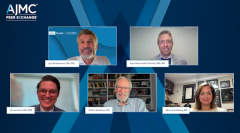
New therapies will matter only if patients are identified. The panel closes on hope for expanded treatment options and a shared call to test more people, with newborn screening as a long-term goal.
Advertisement
Episodes in this series
The panel closes the series with "Finding Every Patient With AATD: Panel Closing Thoughts."
Dr. Haumschild asks each expert for a one-minute closing pearl for the viewing audience.
Dr. Barjaktarevic thanks the audience and says AATD is important scientifically and for what it teaches about larger diseases, including COPD. He notes that CT imaging can quantify the percentage of emphysema. AATD research has pioneered its use, and it has not yet reached the broader COPD population where it belongs. He also praises the coordination in this field. Patients help direct the science, take part in regulatory discussions, and see manufacturers cooperate under rules that patients and stakeholders set.
Dr. Kuhn says the word he keeps returning to is hope. Many therapies are in development, and not all will cross the finish line, but he expects many more options soon. His hope is that this momentum builds inertia and strengthens the argument for testing. Trials are limited by how many patients exist. If identification stays near the roughly 6 percent seen in the UK Biobank, the best therapeutics will not make a difference. He wants therapeutics and testing to feed each other.
Dr. Goldklang emphasizes the promise of options for lung disease, liver disease, and early disease. She asks viewers to treat that promise as a call to arms to test. She acknowledges how hard it is for primary care to find the time. However, the potential upside for patients and family members is tremendous.
Dr. Sandhaus says the pearls have already been strewn, so his message is test, test, test. The best and most advanced drugs cannot help patients who are never found. He looks forward to AATD joining the newborn screening panel in every state. Then every patient would be detected, and the only question would be choosing the right therapy.
Thank you for watching this AJMC Peer Exchange series on alpha-1 antitrypsin deficiency. Please subscribe to our eNewsletter for information on upcoming video series.
Advertisement
Related to this article

A 20-year review found repeated prostate-specific antigen screening at ages 55 to 69 cuts prostate cancer deaths but increases overdiagnosis.

Blinded data show 33% of patients with idiopathic pulmonary fibrosis had FVC gains at 12 weeks with no related serious adverse effects.

The FDA approved ribitol (Welgemda) as the first therapy for LGMD2I/R9, backed by a 112-patient phase 3 trial.
With its second approval in a week, giredestrant is now the first SERD to be indicated for both early- and advanced-stage breast cancer.
In this Q&A, Konstantin Dmitrievich Penkov, MD, discusses delayed quality-of-life decline with cemiplimab plus chemotherapy in aNSCLC.
Advertisement
Advertisement
Trending on AJMC
1
Sanofi to Acquire Insmed, Expanding Respiratory Treatment Portfolio
2
Twice Yearly Inclisiran Cuts MACE Risk in First siRNA Outcomes Trial
3
FDA Approves Upadacitinib as First Systemic Therapy for Vitiligo
4
Baricitinib, Ritlecitinib Show Similar 1-Year Regrowth in Severe AA
5