

Opinion|Videos|November 11, 2026
Phase 2 Trial Results for Recombinant AAT-Fc Therapy in AATD
Phase 2 data show recombinant AAT-Fc therapy restoring normal functional levels with far fewer infusions than plasma-derived augmentation. Whether those levels translate to clinical benefit will depend on longer studies.
Advertisement
Episodes in this series
"Phase 2 Trial Results for Recombinant AAT-Fc Therapy in AATD" walks through the Elevate study, from design to endpoints to open questions.
Dr. Haumschild notes that Phase 2 Elevate data presented at ATS 2026 met all primary and key secondary endpoints. He asks Dr. Barjaktarevic to walk through the background, methods, and key results, and to say whether the achieved levels will translate into meaningful outcomes.
Dr. Barjaktarevic first notes that plasma-derived augmentation has not exhausted its potential in dosing or in subcutaneous and inhaled delivery. Recombinant therapy targets the gaps he described earlier: dosing frequency, target levels, supply, and infection risk. Elevate was a 32-week, double-blind, randomized, active-controlled Phase 2 study in adults with AATD-associated emphysema. Participants had severe deficiency confirmed by genotype and level, were aged 18 to 80, and had moderate to severe obstruction. They were randomized to efdoralprin alpha every three weeks, efdoralprin alpha every four weeks, or a standard plasma-derived therapy. In total, 97 individuals were enrolled.
The primary endpoint was change in trough functional alpha-1 antitrypsin at steady state. Secondary measures included average concentration, days in the normal range, safety, immunogenicity, and pharmacokinetics. Trough levels with standard therapy were about 7 micromolar, compared with roughly 24 micromolar in the every-three-week arm and 17 micromolar in the every-four-week arm. Levels persisted throughout. Patients on plasma-derived therapy spent about 40 percent of the time in the normal range, while the every-three-week arm remained in range 100 percent of the time. The manufacturer describes this as restoring normal function rather than merely augmenting.
He cautions that biomarkers are not clinical outcomes. Proving benefit requires evidence on lung function, symptoms, emphysema progression, exacerbations, and mortality, which demands long studies. An open-label extension will track lung density by CT. Numerically fewer exacerbations at higher levels are hypothesis-generating only. Dosing every three or four weeks would mean about 17 infusions a year instead of 52. Phase 3 trials are planned.
In "What Clinicians Want to See Next From Recombinant AATD Therapy," the panel considers what additional data clinicians want from this molecule and how it could change their practice.
Advertisement
Related to this article

The FDA approved asundexian (Sunharbo) with antiplatelet therapy to reduce recurrent stroke risk after noncardioembolic stroke or high-risk TIA.

The FDA granted accelerated approval to amivantamab and hyaluronidase for previously treated recurrent or metastatic head and neck cancer.

A systematic review and meta-analysis found GLP-1 RAs improved liver and metabolic markers in MASLD and MASH, but long-term benefits remain unproven.
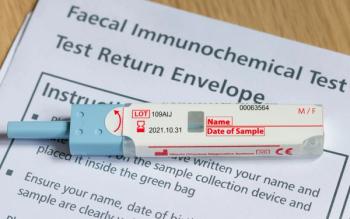
Mailed fecal immunochemical test (FIT) outreach raised CRC screening at federally qualified health centers, but gains faded by year 3.

SIRVA was rare after COVID-19 and flu shots, but COVID-19 vaccination had about 7 more cases per 100,000 doses in a study of 1.8 million.
Advertisement
Advertisement
Trending on AJMC
1
FDA Approves Asundexian, First FXIa Inhibitor to Prevent Repeat Stroke
2
How Plans, Clinicians Should Handle Gray-Market Retatrutide
3
Pharmacy, Claims Data Show High Resmetirom Persistence in MASH
4
FDA Approves First Dual-Targeted Therapy for Advanced HNSCC
5