

Opinion|Videos|November 11, 2026
What Clinicians Want to See Next From Recombinant AATD Therapy
Equivalent efficacy with fewer infusions would already improve patients' lives, while a superior effect on lung loss or exacerbations would change the treatment threshold. The panel outlines what data would support either outcome.
Advertisement
Episodes in this series
Drs. Kuhn and Goldklang consider the clinical stakes in "What Clinicians Want to See Next From Recombinant AATD Therapy."
Dr. Haumschild asks Dr. Kuhn what additional data he hopes to see from efdoralprin alpha and how it might change his practice. Dr. Kuhn calls it an exciting time, following the positive Elevate results shared at ATS. He describes two possible wins. The first is that the therapy proves bioequivalent to standard augmentation, which would still be significant. A weekly infusion is a huge tax on patients' daily lives, and he cannot imagine setting aside at least half a day each week while working. Infusions every three to four weeks would improve quality of life and let patients travel without worrying about double-dose kinetics. Phase 3 trials and the open-label extension, with CT densitometry, will provide a longer timeline.
The second possible win is more ambitious. Because the control arm is standard augmentation, and withholding augmentation would be unethical, the trial cannot answer whether higher levels help. However, if the drug generates higher alpha-1 levels and greater suppression of neutrophil elastase, other studies could show it is bio-better. That would offer better control of lung loss as well as convenience.
He also highlights the low exacerbation numbers, which he says should be treated as a numerical signal only. Exacerbations are a subjective endpoint, but he celebrates when his COPD patients have a cold that stays a cold. Higher augmentation levels might let a viral infection remain just that, rather than triggering a true exacerbation.
Dr. Haumschild then asks Dr. Goldklang where efdoralprin alpha would fit in her treatment algorithm if approved. She finds it hard to imagine not offering it and thinks patients will want to move over. She anticipates logistical issues, including a longer infusion time. Other efforts, such as subcutaneous plasma-derived therapy, could also be transformative.
Our next episode, "Switching AATD Patients to Every 3-4 Week Infusions: Logistics and Cost," turns to what patients told Dr. Sandhaus about switching, and what shorter infusion schedules mean for health systems.
Advertisement
Related to this article

The FDA approved asundexian (Sunharbo) with antiplatelet therapy to reduce recurrent stroke risk after noncardioembolic stroke or high-risk TIA.

The FDA granted accelerated approval to amivantamab and hyaluronidase for previously treated recurrent or metastatic head and neck cancer.

A systematic review and meta-analysis found GLP-1 RAs improved liver and metabolic markers in MASLD and MASH, but long-term benefits remain unproven.
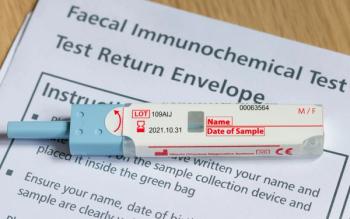
Mailed fecal immunochemical test (FIT) outreach raised CRC screening at federally qualified health centers, but gains faded by year 3.

SIRVA was rare after COVID-19 and flu shots, but COVID-19 vaccination had about 7 more cases per 100,000 doses in a study of 1.8 million.
Advertisement
Advertisement
Trending on AJMC
1
FDA Approves Asundexian, First FXIa Inhibitor to Prevent Repeat Stroke
2
How Plans, Clinicians Should Handle Gray-Market Retatrutide
3
Pharmacy, Claims Data Show High Resmetirom Persistence in MASH
4
FDA Approves First Dual-Targeted Therapy for Advanced HNSCC
5