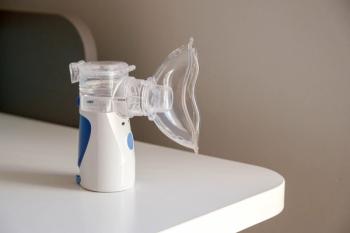
ALIS added to azithromycin and ethambutol raised culture conversion in new MAC lung disease, with rare resistance, in an ENCORE analysis at IDWeek 2026.
Two posters presented at AMCP 2026 suggest improving GLP-1 adherence and access may enhance outcomes and lower obesity-related costs.
Gaps in both persistence and coverage continue to limit the real-world impact of glucagon-like peptide-1 (GLP-1) receptor agonists for
Together, the findings highlight persistent barriers to GLP-1 therapies across the obesity treatment continuum and point to key opportunities to improve both clinical and economic outcomes.
Investigators of the
To better understand this issue, researchers developed a claims-based model to identify factors associated with GLP-1 discontinuation at 120 and 365 days among patients initiating the therapy for weight management. The analysis used medical and pharmacy claims data from July 1, 2019, through March 31, 2024, capturing patients who initiated liraglutide (Saxenda; Novo Nordisk), semaglutide (Wegovy; Novo Nordisk), or tirzepatide (Zepbound; Eli Lilly and Company).
Persistence, assessed at both 120 and 365 days, was defined as the proportion of patients without a gap of 60 days or more in GLP-1 supply. Additionally, logistic regression models identified factors associated with persistence, including demographics, comorbidities, out-of-pocket costs, body mass index (BMI) changes, prescriber visit frequency, and dose titration.
Among 53,183 patients initiating a GLP-1, persistence declined from 65% at 120 days to 34% at 365 days. Patients with out-of-pocket costs of $150 or more had higher discontinuation rates than those with costs below $42.
Regular visits with the prescribing clinician strongly predicted persistence: patients with 5 or more visits were 49 times more likely to remain on therapy at 120 days, and those with 11 or more visits were 8 times more likely at 365 days. Other predictors of persistence included age between 38 and 53, early BMI reduction, and a history of bariatric surgery. By contrast, use of low-dose semaglutide or tirzepatide beyond 28 days was associated with discontinuation.
"Our findings highlight the importance of early clinical response, affordable costs, and frequent prescriber engagement in improving persistence to GLP-1 therapies,” primary author Heather Houska, PharmD, said in a statement to The American Journal of Managed Care® (AJMC®). “Our insights offer tactical recommendations to health care providers and policymakers to develop patient-centered interventions that address barriers to persistence. By doing so, we can enhance the effectiveness of GLP-1 therapies and support sustainable weight management for patients."
The
Obesity affects 42.4% of US adults and is associated with an increased risk of cardiovascular disease, type 2 diabetes, hypertension, and obstructive sleep apnea, contributing to an estimated $200 to $370 billion in annual direct medical costs, reduced workplace productivity, and 3 to 7 additional sick days per year.
Focusing on semaglutide 2.4 mg, the GLP-1 demonstrated 16.9% weight loss at 68 weeks in the STEP 1 trial (
Investigators noted that most economic models use lifetime horizons without breaking down the impact across health care stakeholders. To address this, they developed an Excel-based actuarial model to estimate the system-wide monetary impact of covering semaglutide 2.4 mg for 1 million patients with obesity for up to 5 years. Outputs included incremental per-member-per-month (PMPM) costs and return on investment (ROI) by stakeholder.
The model incorporated MarketScan data to assess comorbidity-related costs, while published literature informed relationships among BMI, cost savings, productivity, and societal outcomes. Meanwhile, clinical trial data provided efficacy inputs, and real-world utilization data from Komodo Health informed prescription estimates.
The base case assumed a 10% treatment rate for eligible members, a drug cost of $1349 per fill with a 63% rebate, and 7 annual prescription fills. Eligible patients had a BMI of 30 or greater, or 25 or greater with at least 1 weight-related comorbidity. In the simulation of 1 million lives, 49% were eligible for obesity treatment.
“This poster shows the results of a 5-year scenario for employer coverage of semaglutide for patients with obesity to be a 1.6:1.0 ROI for employers overall but that it varies for different patient subpopulations depending on their number of comorbidities and the range of patients’ BMI,” co-author and presenter Gregory Warren, FSA, FCA, MAAA, said in a statement to AJMC®.
As Warren mentioned, semaglutide coverage resulted in cost savings for employers, with an ROI of 1.6:1, reflecting $5.28 PMPM in costs and $8.21 PMPM in returns. However, PBMs saw the highest return at a 2:1 ROI, with costs of $0.57 PMPM and returns of $1.13 PMPM.
Health plans and government payers also realized savings, with ROIs of 1.4:1 and 1.2:1 and net savings of $2.95 PMPM and $0.41 PMPM, respectively. Overall, total system costs decreased $2.73 PMPM, corresponding to an ROI of 0.9:1. The reduction in obesity-related comorbidity costs was the primary driver of savings.
By contrast, patients experienced a cost increase of $8.58 PMPM due to semaglutide co-pays, although associated quality-of-life improvements were not monetized.
“Coverage of semaglutide 2.4 mg for obesity generated employer and payer savings while improving overall system efficiency through lower comorbidity-related costs, thereby supporting the value of obesity pharmacotherapy within managed-care populations,” the investigators concluded.
References