
Opinion|Videos|November 24, 2026
The Future of Vitiligo Treatment: A Message to Payers
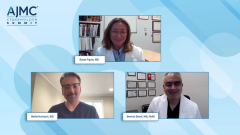
The panel closes with an optimistic look at vitiligo's treatment pipeline and a direct appeal to the payer community to treat the disease with the seriousness patients deserve.
Advertisement
Episodes in this series
"The Future of Vitiligo Treatment: A Message to Payers" closes the program with a look ahead, and a direct message for the payer community.
Asked what the next five years hold, Dr. Desai answers without hesitation that the outlook for vitiligo treatment is extremely bright. He points to oral JAK inhibitors nearing approval, along with potential biologics and new small molecules still earlier in development, and mentions learning just the day before about a new cytokine inhibitor entering Phase 1 testing. He predicts a long stretch of meaningful progress ahead and encourages clinicians to carry that optimism into the exam room, since patients often arrive discouraged and can leave a visit with real hope once they understand how much the treatment landscape is changing.
Dr. Hamzavi offers closing thoughts grounded in his years practicing in Detroit, describing the pain and suffering he has witnessed among the patients he serves. He tells viewers that vitiligo care is entering a new era, promising that outcomes for patients starting treatment now will be considerably better than for those treated years ago, while crediting earlier patients' experience for helping build that progress. He frames the work ahead as a continued journey rather than a finished project, one he intends to keep walking alongside his patients as new options arrive.
Dr. Desai closes by calling vitiligo care a partnership that extends beyond board-certified dermatologists to the broader dermatology community, patients, and patient advocacy groups such as the Global Vitiligo Foundation, where he serves as president, and its outreach efforts including World Vitiligo Day each June. He directs a final appeal to the payer community watching the program, asking them to treat vitiligo as a serious medical condition and to validate patients' concerns rather than let research advances go unused, calling it a disservice to patients if new therapies remain inaccessible. Both panelists thank Dr. Taylor for moderating a conversation they hope will continue.
Thank you for watching this AJMC Stakeholder Summit series on vitiligo. Please subscribe to our eNewsletter for information on upcoming video series.
This video was supported independently by Pfizer.
Advertisement
Related to this article

The FDA approved ribitol (Welgemda) as the first therapy for LGMD2I/R9, backed by a 112-patient phase 3 trial.

With its second approval in a week, giredestrant is now the first SERD to be indicated for both early- and advanced-stage breast cancer.
In this Q&A, Konstantin Dmitrievich Penkov, MD, discusses delayed quality-of-life decline with cemiplimab plus chemotherapy in aNSCLC.

CRC diagnoses after endoscopic mucosal resection (EMR) were uncommon in a real-world cohort, though racial and ethnic differences remain unclear.

San Francisco experts say earlier IgA nephropathy and FSGS detection depends on primary care education and care coordinators.
Advertisement
Advertisement
Trending on AJMC
1
FDA Approves First New Early-Stage BC Hormone Therapy in Over 20 Years
2
CGM Discharge Barriers Center on Prior Authorization and Education
3
FDA Approves Oral Ribitol for LGMD2I/R9, a First in Limb-Girdle Muscular Dystrophy
4
Value-Based Pilot for Medicaid Members With Substance Use Disorder
5