



Psoriasis
Latest News
Advertisement
Latest Videos
Advertisement
More News

The impact of psoriasis on quality of life goes beyond clinical measures, such as psoriasis area severity index (PASI) and body surface area (BSA), a study finds.

Substantial savings opportunities exist by using lower-cost biologics for patients with plaque psoriasis, according to one study.

New data presented at the 2025 World Congress of Pediatric Dermatology annual meeting highlights the efficacy and safety of once-daily icotrokinra (JNJ-2113) in adolescents with moderate to severe plaque psoriasis.

Biologics for psoriasis had lower drug survival in women compared with men, according to one study.

Posters presented at the 2025 American Academy of Dermatology Annual Meeting found tildrakizumab outcomes to have a mean drug survival of almost 3 years.

Posters presented at the 2025 American Academy of Dermatology Annual Meeting found bimekizumab to have benefits beyond safety and efficacy findings.

Biologics targeting interleukin (IL)-12, IL-23, or IL-17 reduced serious infections, while tofacitinib increased infection risk, according to one study.
Two posters presented at the 2025 American Academy of Dermatology Annual Meeting highlighted the importance of improving quality of life in patients with moderate to severe scalp psoriasis.
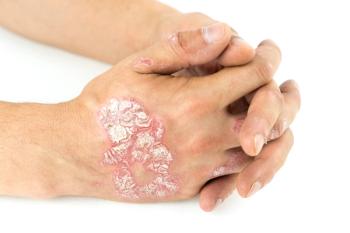
Tildrakizumab showed early and sustained effectiveness and quality of life (QOL) improvements in patients with moderate to severe psoriasis across 2 studies.
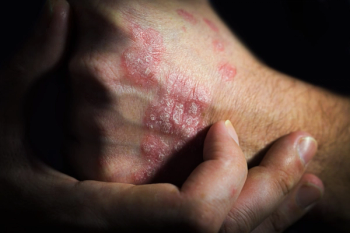
Both drugs showed significant improvements, with higher response observed for bimekizumab, study finds.
A real-world study in Spain finds faster improvements with induction therapy but highlights long-term drug survival challenges.
Roflumilast demonstrated effectiveness and safety in treating psoriasis, with added benefits for patients with comorbidities.
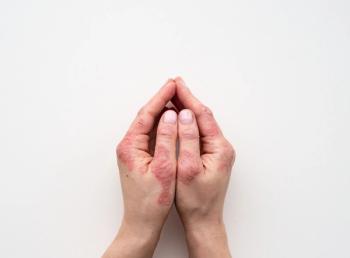
A consistent safety profile and sustained efficacy were observed in patients with moderate to severe plaque psoriasis.

New research highlights the significant health care resource utilization burden of generalized pustular psoriasis (GPP), revealing higher hospitalizations and costs among patients experiencing flares.

These findings may offer more personalized treatment and prevention recommendations for patients with psoriasis.

Study highlights the efficacy and safety of tildrakizumab in improving physical, psychological, and social aspects of quality of life for patients with psoriasis.
Secukinumab delivers sustained efficacy and quality of life improvements in pediatric generalized pustular psoriasis (GPP).
Psychological resilience plays an important role in managing psoriasis symptoms and enhancing patient well-being, study reveals.

Study highlights barriers to care, treatment preferences, and interest in research participation in psoriasis in the Latine community.

The most-read psoriasis content in 2024 covered efficacy and safety findings of various drug clinical trials.

Novel strategies in the VISIBLE trial set a new standard for recruiting and retaining diverse participants with skin of color in dermatology clinical trials.
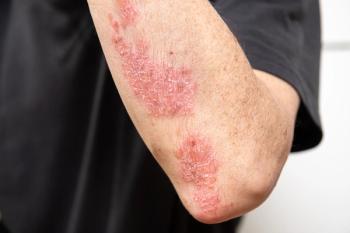
Researchers found patients reporting greater disease burden and lower health-related quality of life (HRQoL) are more likely to switch to biologic therapies, regardless of clinician-rated disease severity.

More than 70% of patients continued treatment with secukinumab after the first year, a study finds.

Data reveal a strong association between non–high-density lipoprotein (non-HDL) cholesterol to HDL cholesterol ratio and psoriasis onset in US adults.

Incorporating dried fruits into your diet may offer protective benefits against psoriasis, a new study finds.
Advertisement
Advertisement
Trending on AJMC
1
Multiagonists Outpace Older GLP-1 Drugs for Weight Loss
2
The Next Frontier in Hepatitis B Functional and Virologic Cure
3
Cardiac Risks of COVID-19 Vaccine vs Infection: Eman Toraih, MD, PhD
4
CKM Guideline Aims to Break Down Specialty Silos: Keith Bellovich, DO
5