Oncology
Latest News
Advertisement
Latest Videos
Advertisement
More News
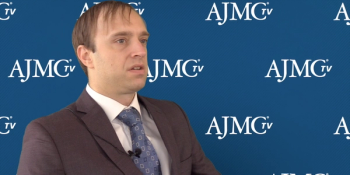
The Oncology Care Model (OCM) has helped practices develop their capacity to use data for continuous quality improvement, said Aaron Lyss, MBA, director of strategy and business development at Tennessee Oncology.
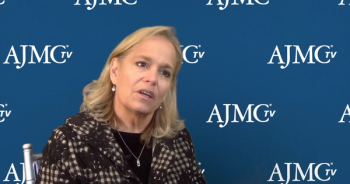
There will never be all mandatory payment models or all value-based models, but we can craft a value-based model around just about anything as long as everybody agrees on what the criteria is, said Lili Brillstein, CEO of Brillstein Collaborative Consulting, and former Director for Episodes of Care at Horizon Blue Cross Blue Shield of New Jersey.
New technologies and quick drug approvals contribute to the challenges of incorporating value-based care in oncology, said Lili Brillstein, CEO of Brillstein Collaborative Consulting, and former Director for Episodes of Care at Horizon Blue Cross Blue Shield of New Jersey.
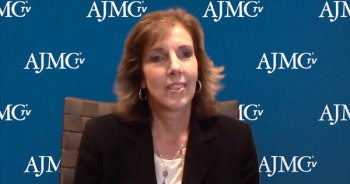
Raising awareness on the involvement of primary care providers can assist cancer survivors in transitioning from oncology care, said Kelly Filchner, MSN, director at Fox Chase Cancer Center Partners.

Coverage of our peer-reviewed research and news reporting in the healthcare and mainstream press.

Despite the immediate distraction from coronavirus disease 2019 (COVID-19), panelists at the 2020 Virtual Community Oncology Conference said community oncologists must keep pressure on pharmacy benefit managers (PBMs) as the 2020 campaign heats up—lest they lose the momentum to rein PBM practices within the umbrella of drug pricing reform.
The bright spot of telemedicine's success during the coronavirus disease 2019 pandemic cannot overshadow the stresses on patients and practices, which will both have ongoing challenges when the pandemic ends, said panelists during a legislative update on day 2 of the 2020 Virtual Community Oncology Conference, convened by the Community Oncology Alliance.
The American Journal of Managed Care® (AJMC®) recently spoke with Dinesh Kapur, MD, of Eastern Connecticut Hematology and Oncology, also known as ECHO, an advanced community oncology conference. Kapur spoke about how the value of community oncology, clinicial trials, and how staff are spending remote work days developing artificial intelligence (AI) tools for predictive patient analytics to improve care.
Douglas M. Long, MBA, vice president of industry relations for IQVIA, surveyed the effects of COVID-19 as he kicked off AMCP eLearning Days, a webinar series held in place of the annual meeting of the Academy of Managed Care Pharmacy (AMCP).
In this preview interview for this year’s virtual 2020 Community Oncology Conference, The American Journal of Managed Care® speaks with Kathy Oubre, MS, chief operating officer of Pontchartrain Cancer Center in Louisiana, on why it is her privilege to work with patients who have cancer, as well as her thoughts on telehealth after the pandemic and why being in a hurricane-prone area necessitates healthcare that is flexible.
Policy, clinical, and targeted therapy updates in oncology.
The Association of Community Cancer Centers held its 46th Annual Meeting and Cancer Center Business Summit March 4 to 6 in Washington, DC.
“Quest for Value: Advancing Oncology Value-based Care,” this year’s first installment in the Institute for Value-Based Medicine (IVBM) from The American Journal of Managed Care®, zeroed in seniors, a population that’s growing not just in Florida but across the United States. Older Americans are more likely to develop cancer, but thanks to better detection and treatment, they are more likely to survive cancer, too.

Payers view the National Comprehensive Cancer Network (NCCN) guidelines as a gold standard for making reimbursement decisions, according to a panel of experts who spoke recently about biosimilar uptake.

Patients with cancer are reporting that they have faced treatment delays due to the novel coronavirus disease 2019 (COVID-19); the Trump administration reached an agreement with 3M Co. to produce nearly 167 million face masks in the next 3 months; US hospitals cite lack of supplies, testing coordination as major obstacles during the pandemic, according to an HHS survey.
“These are times of unprecedented and unimaginable challenges for our health care system."

Racial and ethnic biases held by research and clinical professionals could contribute to low minority participation in oncology clinical trials, according to a study recently published in Cancer, a journal from the American Cancer Society.
We think that the ACCC is uniquely positioned to bridge the gap between the needs in clinical trials and the patients who are in the community. Most clinical oncology is delivered in the community. That's where the patients are, that's where the need is, said Randall Oyer, MD, medical director of the Oncology Program at Penn Medicine Lancaster General Health and president of ACCC.
There has been significant improvement in payers' understanding of site of care issues, but steps still need to be taken to address these issues, said Lucio Gordan, MD, president and managing physician at Florida Cancer Specialists.
Ensuring that all frontline clinicians are equipped, confident, and engaged in executing skilled communication, which is at the core of palliative care, will make a significant difference for how value-based care unfolds, how payment reform happens, and how the lived experience plays out for patients and families to be a better one, said Rebecca Kirch, JD, executive vice president, Health Care, Quality and Value, National Patient Advocate Foundation.
Bradley Prechtl on Factors Oncology Practices Must Consider When Considering an Affiliation Option
By
I think a lot of it is, do you trust the people that you're going to be working with? What does it come down to economically? And then I would say on the third end is what can really be done to enhance patient care? As it relates to the decision that you make, said Bradley Prechtl, MBA, chief executive officer of the American Oncology Network.
This week’s selection was one of our most-read articles of 2018.

The authors said their study is the first to show that targeted treaments for patients with certain molecular alterations could be a possibility in pancreatic cancer.
My Presidential theme was to look at the interdisciplinary care team involved in the actual delivery of cancer therapies and cancer care, said Ali McBride, PharmD, MS, BCPS, BCOP, clinical coordinator of hematology/oncology in the Department of Pharmacy at The University of Arizona Cancer Center and outgoing president of ACCC.
Susan Dentzer Discusses Available Innovations in Oncology to Promote Efficient Patient-Centered Care
By
There are many applications that are available today that could be brought into the oncology landscape to create a much more patient-centered focus of experiences for those undergoing care, said Susan Dentzer, senior policy fellow at the Duke-Margolis Center for Health Policy.
Advertisement
Advertisement
Trending on AJMC
1
Extension Studies in TPIP Show Promise in PAH, PH-ILD
2
Bepirovirsen Approval Offers New Option for Chronic HBV Treatment
3
Inhaled Amikacin Raises Culture Conversion in New MAC Lung Disease
4
Bronchiectasis GWAS Highlights Candidate Targets Shared With COPD
5