
Opinion|Videos|November 5, 2026
AML Targeted Therapies, Molecular Testing, and Limitations of Current Regimens
Every patient with AML needs comprehensive mutation testing at diagnosis and again at progression, yet even effective targeted and venetoclax-based regimens remain noncurative and carry cumulative toxicity.
Advertisement
Episodes in this series
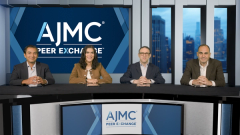
In "AML Targeted Therapies, Molecular Testing, and Limitations of Current Regimens," the experts weigh the promise of precision therapy against the persistent shortcomings of current treatment.
Dr. Mahmoudjafari asks Dr. Murthy about the role of FLT3 and IDH inhibitors in his practice. Dr. Murthy states that every patient with AML should undergo next-generation sequencing or PCR mutation testing, because treatment is no longer one size fits all. Up to 30% to 40% of patients carry FLT3 or IDH mutations. Targeted agents have been studied in the frontline and relapsed or refractory settings, where several are approved as monotherapy. Frontline combination trials have shown improved efficacy over standard of care. He counts three approved FLT3 inhibitors, two IDH1 inhibitors, and one IDH2 inhibitor. Some mutations emerge only at progression, so retesting is essential to avoid missing a targeted treatment opportunity. Dr. Mahmoudjafari adds that coverage for testing and retesting can be challenging.
Dr. Zeidan then outlines key limitations of current regimens. The biggest is that none are curative. Early hope that azacitidine-venetoclax might produce a tail on the survival curve has faded with longer follow-up. A small subset, possibly NPM1-mutated patients, may achieve durable treatment-free remissions. Most patients are told they will remain on therapy indefinitely and will ultimately need a new treatment. Tolerability is another problem. He observes cumulative myelosuppression, with some patients now on eight-week cycles receiving only a few days of each drug. He cites a recent paper in Blood suggesting venetoclax causes cumulative bone marrow microenvironment damage. Patients may still need growth factors, antibiotic prophylaxis, and intermittent transfusions. IDH inhibitors cause less myelosuppression, while FLT3 and menin inhibitors bring differentiation syndrome and QTc prolongation risks. Some of his stable patients see his nurse practitioner more often than they see him. Dr. Mahmoudjafari emphasizes ongoing education and the separate insurance pathways for oral and intravenous therapies, noting that January plan changes create recurring coverage challenges.
Up next, in "Positioning All-Oral Hypomethylating Agent Plus Venetoclax Therapy in AML," Dr. Stein opens the third section by explaining where an all-oral regimen fits in practice.
Advertisement
Related to this article
Naim Alkhouri, MD, on when to judge MASH treatment response, counseling on weight and muscle loss, primary care screening, and future trial end points.

Pharmacists outline new oncologic therapeutics, from pancreatic cancer to myeloma, and what high prices and crowded markets mean for payers.

Invivyd presented preclinical IDWeek 2026 data on VMS063, an investigational antibody that neutralized B3 and D8 measles variants in vitro.

Sphingolipid profiles in plasma and breath condensate differed between IPF and f-HP and tracked with disease severity, CHEST 2026 data show.

The FDA granted accelerated approval to the first plasmid DNA-based immunotherapy for adults with recurrent respiratory papillomatosis (RRP).

October's FDA approvals included the introduction of 5 non-oncology treatment options across specialties.

A phase 4 study found 69% of patients with OAB were consistently satisfied with vibegron at 12 months, with exploratory persistence of 59.8%.
Advertisement
Advertisement
Trending on AJMC
1
NYC Marathon Death Puts Rhabdomyolysis Risk Factors in Focus
2
Real-World Evidence, Rare Liver Disease Data Headline Kidney Week 2026
3
Acoramidis Linked to Fewer Hospitalizations Than Tafamidis in ATTR-CM
4
Disease Extent Linked to Complications After Deep Endometriosis Surgery
5