
Opinion|Videos|November 19, 2026
Securing Access to Oral AML Therapy: Formularies, Prior Authorization, and Copays
Adding oral agents to hospital formularies speeds initiation but creates financial risk, and even dedicated access teams struggle against prior authorization delays, steep copays, and automated denials.
Advertisement
Episodes in this series
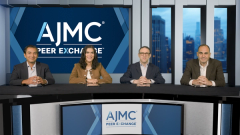
In "Securing Access to Oral AML Therapy: Formularies, Prior Authorization, and Copays," the panel explores the institutional effort required to get oral AML drugs to patients without interruption.
Dr. Mahmoudjafari notes that payers may not share clinicians' urgency about leukemia. She asks Dr. Stein how his team ensures uninterrupted access to oral agents before and during hospitalization. Dr. Stein explains that newly diagnosed inpatients once waited while prescriptions were filled at an outside or institutional specialty pharmacy, delivered, and processed for copay assistance. His center asked its pharmacy and therapeutics committee to add venetoclax to the inpatient formulary. Formulary status creates its own risk. If a physician prescribes it off label and insurance denies outpatient coverage, the cancer center may absorb the ongoing cost. His center now strictly limits prescribers. Pharmacy confirms use only for FDA-approved or NCCN category 2A or higher indications.
For outpatient access, Dr. Stein credits a dedicated team, including prior authorization staff, pharmacists who help with appeal letters, and copay assistance specialists. Even so, outcomes are inconsistent. He describes a patient starting cycle 2 of hypomethylating agent plus venetoclax who cannot obtain venetoclax because of copay challenges. Dr. Mahmoudjafari shares that her institution also added venetoclax to formulary to avoid treatment delays. It restricts inpatient use to newly diagnosed patients and requires an active outpatient authorization, so supply is not cut off after discharge. She calls the coordinated effort gargantuan and increasingly complex. Copay foundation grants can run out in the first month of the year, leaving patients without support.
Dr. Stein then raises a newer dynamic: artificial intelligence in medical billing disputes. He admits he now uses AI to draft his own appeal letters, which he finds quite effective. On the other side, payers deploy AI agents that scan those appeals for grounds to deny. He expects both sides to keep escalating and soon outperform the humans involved. Dr. Mahmoudjafari agrees the field is in for an interesting contest.
Our next episode, "Transitioning to All-Oral AML Therapy: Prior Authorization Pearls and Copay Timing," turns to Dr. Murthy's approach to bridging patients onto oral therapy and Dr. Zeidan's prior authorization pearls.
Advertisement
Related to this article

CRC diagnoses after endoscopic mucosal resection (EMR) were uncommon in a real-world cohort, though racial and ethnic differences remain unclear.

San Francisco experts say earlier IgA nephropathy and FSGS detection depends on primary care education and care coordinators.
The FDA has approved secukinumab for PMR after the REPLENISH trial showed doubled sustained remission and lower steroid use vs a steroid taper alone.
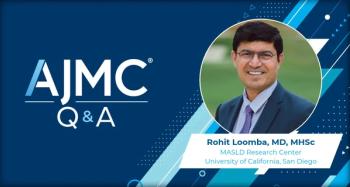
Earlier MASH fibrosis detection is more urgent now that treatments exist, and automating FIB-4 in EHRs could help primary care, says Rohit Loomba, MD.
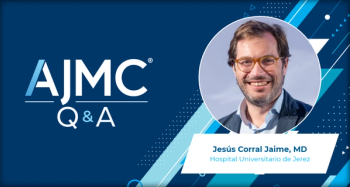
In this Q&A, Jesús Corral Jaime, MD, discusses real-world CEMI-LUNG data on cemiplimab in advanced NSCLC presented at the ESMO 2026 Congress.

Neladalkib earned accelerated approval for previously treated ALK-positive NSCLC, with ORRs of 49% and 32%.

Non-US-born adults had higher CRC screening nonadherence than US-born adults, particularly those with less than 15 years of US residence.

The once weekly self-injected treatment is the first dual-binding nanobody C5 inhibitor approved for adults with AChR antibody-positive gMG.
Advertisement
Advertisement
Trending on AJMC
1
Emerging Threats to Cell and Gene Therapy Access
2
FDA Approves Oral Giredestrant Regimen for ESR1-Mutated Breast Cancer
3
FDA Approves Secukinumab as First Anti–IL-17 Biologic for PMR
4
Hepatitis B Screening Gaps Persist as Functional Cure Option Arrives
5