
Opinion|Videos|October 22, 2026
Frailty, Comorbidity, and Social Determinants of Health in AML Treatment
Performance status, comorbidity indices, and geriatric assessment frame what a patient can tolerate, while insurance, health literacy, and caregiver support often determine what care is actually feasible.
Advertisement
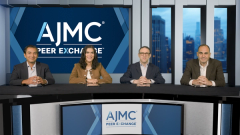
"Frailty, Comorbidity, and Social Determinants of Health in AML Treatment" takes up the question of how clinicians measure vulnerability beyond the leukemia itself.
Dr. Mahmoudjafari asks Dr. Murthy how he weighs frailty, comorbidities, and functional status when choosing initial treatment. Dr. Murthy calls performance status the easiest and most consistently performed assessment, using either the ECOG or Karnofsky scale. Comorbidity assessment is possible but cumbersome, as with the Hematopoietic Cell Transplantation-Comorbidity Index. He notes that key components can often be captured with simpler metrics. Considerable research now focuses on bringing geriatric assessment into routine clinic visits. The comprehensive geriatric assessment remains the gold standard, but it takes substantial time, so truncated versions targeting key domains are used. He believes these factors predict tolerability and outcomes regardless of whether treatment is intensive, less intensive, targeted, or nontargeted. Dr. Mahmoudjafari adds that concomitant medications also shape the initial choice, and that getting first-line therapy right matters most.
Dr. Zeidan then addresses social determinants of health, including access to care, health literacy, transportation, and caregiver availability. He argues that leukemia care cannot be reduced to applying clinical trial data, because human judgment remains essential. A fit patient who is homeless or uninsured may not be a safe candidate for outpatient therapy. Some targeted drugs can be given in the hospital, but uninsured patients may lose access after discharge. Health literacy is another barrier, since many patients do not fully grasp what intensive or nonintensive chemotherapy entails. Many learn their diagnosis for the first time in the emergency department. They are then told they need six weeks in the hospital and a treatment that carries a serious risk of death. Dr. Zeidan reinforces the value of a multidisciplinary team that attends to these details. He notes that plans can be revisited after initial treatment. He contrasts transplant, often viewed as elective, with induction, which is frequently an emergency.
Dr. Mahmoudjafari asks Dr. Stein to identify the greatest unmet needs for patients living with AML, in both fit and unfit populations. Dr. Stein answers plainly that the greatest unmet need is that patients still have AML. Despite meaningful progress, survival remains unacceptably low. From a policy perspective, he calls for investment in basic and translational science. That research should clarify how high-risk subtypes develop and propagate, and identify new therapeutics.
Until those advances arrive, he focuses on making patients' lives easier, which he argues the medical system is not set up to do. He would like intensive chemotherapy delivered in some outpatient setting rather than a four- to six-week admission. He highlights home blood and platelet transfusions, which he says are available in some states, such as North Carolina, but not in New York. Home lab draws, oral therapy, and hospital-at-home models, which he believes are moving toward reimbursement, would also improve quality of life. He describes the hospital as the worst place to get better, with uncomfortable beds, early-morning needle sticks, and noisy IV pumps. Dr. Mahmoudjafari values his attention to small, day-to-day improvements alongside scientific progress. She agrees that the limited availability of home transfusions is a significant gap for this population.
Our next episode, "Newly Diagnosed AML: Treatment Goals and Current Standard-of-Care Regimens," turns to the panel's goals of therapy and Dr. Zeidan's review of current frontline standards of care.
Advertisement
Related to this article

Cross-ancestry GWAS of more than 1.8 million people flags SERPINA1, SMAD3, and other bronchiectasis targets shared with COPD and chronic bronchitis.

The FDA approved bepirovirsen, the first antisense oligonucleotide for chronic hepatitis B, offering a new treatment with functional cure potential.

ALIS added to azithromycin and ethambutol raised culture conversion in new MAC lung disease, with rare resistance, in an ENCORE analysis at IDWeek 2026.

Insmed’s once-daily TPIP prodrug shows sustained lung vasodilation in PAH and PH-ILD, improving walk distance and other key measures.
Cosibelimab received an NCCN Category 2A preferred designation for locally advanced CSCC, supported by durable responses and low immune toxicity.

ASPEN links green sputum to neutrophils and exacerbations; brensocatib (DPP1) lowers purulence, while meta-analysis supports fewer flare-ups in bronchiectasis.

Experts at CHEST 2026 urge pulmonologists to keep lung cancer in mind for younger patients who never smoked, to order screening and biomarker testing themselves, and to advocate for patients' access to care.

Phentolamine 0.75% (Ryzumvi) won FDA approval for presbyopia based on the phase 3 VEGA-2 and VEGA-3 trials.
Advertisement
Advertisement
Trending on AJMC
1
Bepirovirsen Approval Offers New Option for Chronic HBV Treatment
2
Extension Studies in TPIP Show Promise in PAH, PH-ILD
3
Awareness Gaps Drive Narcolepsy, IH Delays: Logan Schneider, MD
4
Managed Care Keeps Pace With Policy as AMCP Nexus Heads to San Diego
5