
Opinion|Videos|November 12, 2026
Positioning All-Oral Hypomethylating Agent Plus Venetoclax Therapy in AML
An all-oral regimen is a meaningful advance in newly diagnosed AML, yet early monitoring needs, complex dosing, and patient readiness lead many clinicians to begin cycle 1 intravenously.
Advertisement
Episodes in this series
"Positioning All-Oral Hypomethylating Agent Plus Venetoclax Therapy in AML" opens the panel's third section on access, adherence, and real-world integration of oral therapies.
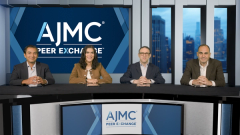
Dr. Mahmoudjafari introduces the third section on real-world integration of oral AML therapies, including access barriers, specialty pharmacy coordination, adherence, and Medicare Part D. She asks Dr. Stein how he positions oral decitabine-cedazuridine plus venetoclax relative to intravenous azacitidine for unfit patients. Dr. Stein emphasizes that an all-oral option for newly diagnosed, older patients is a major advance. His center treats about 80% of these patients as outpatients. The key issue is cycle 1, because some patients given pills do not return for the frequent labs needed to monitor tumor lysis. His practice therefore uses intravenous azacitidine with venetoclax in cycle 1, while prior authorization for the oral agent proceeds. Once disease is debulked or in remission, patients transition to oral therapy from cycle 2 onward. He also flags dosing confusion. A patient prescribed 400 mg of venetoclax may later be reduced to 100 mg, while the bottle still reads 400 mg.
Dr. Murthy describes a similar approach. Most patients are diagnosed after admission, so treatment starts with a parenteral hypomethylating agent and venetoclax. Even stable outpatients often need time for prior authorization, so the oral agent typically begins with cycle 2.
Dr. Zeidan notes his hospital does not stock oral decitabine-cedazuridine for formulary and cost reasons. For outpatients with indolent presentations, he may wait two to three weeks to obtain it. He uses an informal checklist: a supportive family, a sharp patient who will not confuse medications, and confidence the patient will return. Otherwise, he defers oral therapy to cycle 2. Patients with low platelets may feel fine and not appreciate their bleeding risk. Some skip visits because of a fall or fever, which is exactly when they must come in. Someone on the team must track missed visits.
In "All-Oral AML Regimen: Phase 2 Data and Inpatient Care Challenges," Dr. Murthy reviews the phase 2 data behind the all-oral approval and Dr. Zeidan describes the inpatient experience.
Advertisement
Related to this article

Shorter telomere length was linked to a usual interstitial pneumonia pattern (UIP) on CT in patients with ILD, per research presented at CHEST 2026.

Low awareness that fatty liver can silently progress and that MASH fibrosis is treatable drives missed follow-up testing, says Rohit Loomba, MD.

The FDA approved asundexian (Sunharbo) with antiplatelet therapy to reduce recurrent stroke risk after noncardioembolic stroke or high-risk TIA.

The FDA granted accelerated approval to amivantamab and hyaluronidase for previously treated recurrent or metastatic head and neck cancer.
Advertisement
Advertisement
Trending on AJMC
1
IVF Beats IUI for Early Live Births in Unexplained Infertility
2
How Plans, Clinicians Should Handle Gray-Market Retatrutide
3
FDA Approves Asundexian, First FXIa Inhibitor to Prevent Repeat Stroke
4
Early-Onset Cancers Often Found Late as Screening Gaps Persist
5