
Opinion|Videos|October 29, 2026
Stem Cell Transplant Timing and Intensive Chemotherapy Trade-offs in AML
Early transplant referral, MRD-guided sequencing, and a candid accounting of intensive chemotherapy's costs shape how clinicians move older and high-risk patients toward potential cure.
Advertisement
Episodes in this series
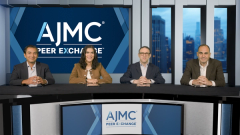
"Stem Cell Transplant Timing and Intensive Chemotherapy Trade-offs in AML" examines when and how high-risk and older patients should move toward allogeneic transplant.
Dr. Mahmoudjafari asks Dr. Stein how he determines transplant timing and eligibility for high-risk or elderly patients. Dr. Stein explains that his center begins transplant planning early, even for patients who may never proceed. The transplant team ideally sees patients within the first two weeks of therapy and begins the donor search. The team is then ready once the patient's disease status allows. He prefers that patients proceed to allogeneic transplant in MRD-negative remission. The challenge is deciding how long to pursue MRD negativity before accepting it may never come.
For intensively treated patients, those who are MRD negative after induction go straight to transplant. Those who are not receive one cycle of consolidation and then proceed if in complete remission, even with persistent MRD. For patients on lower-intensity therapy, the optimal number of azacitidine-venetoclax cycles is less defined, so he typically refers after two to four cycles. TP53-mutated, complex-karyotype disease almost never reaches MRD negativity. Some centers refuse to transplant those patients, while others are more aggressive, leaving practicing clinicians with difficult, center-dependent decisions. Dr. Mahmoudjafari emphasizes timely referral to transplant centers, even for patients who may be treated with oral regimens in their community.
Dr. Murthy then addresses the strengths and limitations of intensive chemotherapy. Its advantages include a fixed treatment duration, with induction and consolidation completed within about six months. It is potentially curative, particularly in favorable-risk disease. The cost is significant toxicity, including neutropenia, fevers, and systemic side effects that comorbid patients struggle to tolerate. Younger patients generally recover and continue therapy, but older patients often face greater challenges. Dr. Murthy applies the same objective fitness criteria and generally favors lower-intensity therapy for older, comorbid patients. He acknowledges exceptions, such as favorable-risk NPM1-mutated disease, where intensive chemotherapy with curative intent may be reasonable.
Our next episode, "Venetoclax Combinations in AML: VIALE-A, VIALE-C, and Practical Challenges," features Dr. Zeidan on how venetoclax reshaped AML care and Dr. Stein on the trials behind it.
Advertisement
Related to this article

Real-world data show antifibrotic dose reductions in IPF were not significantly linked to faster disease progression vs staying on full dose.
Naim Alkhouri, MD, on real-world resmetirom results, when biopsy is still needed, choosing a GLP-1 or resmetirom, and access barriers in MASH

A post hoc ASPEN analysis links darker sputum to higher protease activity in bronchiectasis.

At an AJMC Stakeholder Interchange in Houston, leukemia specialists from academic centers and community practices said menin inhibitors work best in combination, warned that differentiation syndrome can strike months into therapy, and described payer rules that delay access even at flagship centers.

UAB experts said new bladder cancer, myeloma, and lung cancer therapies are changing care, but access and costs remain barriers.
At an AJMC® Stakeholder Interchange in New York, New York, leukemia specialists agreed that menin inhibitors fill a real gap in relapsed/refractory acute myeloid leukemia, but said that slow molecular testing, formulary rules, and thin community infrastructure still determine which patients get them and how fast.
Advertisement
Advertisement
Trending on AJMC
1
Retatrutide Tops Semaglutide on A1C, Weight in Head-to-Head Trial
2
UAB Works to Deliver Cutting-Edge Cancer Therapies, Reach Every Patient
3
Biosimilar Entry Should Trigger a Fresh Look at Biologic Access
4
New Data Link Cabotegravir PrEP to Few HIV Cases, Higher Adherence
5