
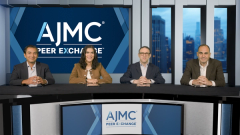
Opinion|Videos|November 19, 2026
Transitioning to All-Oral AML Therapy: Prior Authorization Pearls and Copay Timing
Starting prior authorization before treatment begins, anticipating end-of-year deductible resets, and persisting through appeals can determine whether patients transition smoothly to oral AML therapy.
Advertisement
Episodes in this series
"Transitioning to All-Oral AML Therapy: Prior Authorization Pearls and Copay Timing" takes up the practical question of moving stable patients from intravenous to oral regimens.
Dr. Mahmoudjafari asks Dr. Murthy how he bridges patients from venetoclax plus intravenous hypomethylating agents to an all-oral regimen. Dr. Murthy says the most important factor is the right patient, motivated and able to understand the regimen. Groundwork begins in the hospital, where patients typically stay five to seven days. He first secures venetoclax and antifungal approvals and checks the patient's copay. He confirms parenteral hypomethylating agent doses are covered before submitting the oral authorization, so earlier approvals are not jeopardized. The outpatient pharmacist then manages the authorization after discharge. Response is assessed after cycle 1, but he transitions approved patients even if they are not yet in remission. He also warns of an end-of-year effect. A patient diagnosed in October may pay a high copay in November and December, then face a reset deductible in January.
Dr. Zeidan's top pearl is starting prior authorization early. He has seen teams realize on day 6 or 7 of azacitidine that the process never began. He recommends submitting before treatment starts, since the approval can simply go unused if plans change. His institution keeps a small supply to start therapy while outpatient supply is secured. Patients should not begin a drug they cannot continue at home. He sometimes asks patients to call insurers directly, alongside appeal letters and peer-to-peer reviews. Persistence usually succeeds, though he suspects the barriers are designed to discourage it. Copay foundations can help, but $2,000 can be impossible. He finds it saddest when patients choose seven days of infusion visits because they cannot afford oral therapy, which costs insurers more. Dr. Mahmoudjafari highlights template letters, AI-assisted appeals, and specialized pharmacy technicians, while noting some payers still do not treat leukemia as urgent.
In "Medicare Part D Redesign, Oral Chemotherapy Parity, and AML Treatment Costs," the panel will unpack Medicare Part D changes, oral chemotherapy parity, and provider incentives.
Advertisement
Related to this article

CRC diagnoses after endoscopic mucosal resection (EMR) were uncommon in a real-world cohort, though racial and ethnic differences remain unclear.

San Francisco experts say earlier IgA nephropathy and FSGS detection depends on primary care education and care coordinators.

The FDA has approved secukinumab for PMR after the REPLENISH trial showed doubled sustained remission and lower steroid use vs a steroid taper alone.
Earlier MASH fibrosis detection is more urgent now that treatments exist, and automating FIB-4 in EHRs could help primary care, says Rohit Loomba, MD.
In this Q&A, Jesús Corral Jaime, MD, discusses real-world CEMI-LUNG data on cemiplimab in advanced NSCLC presented at the ESMO 2026 Congress.

Neladalkib earned accelerated approval for previously treated ALK-positive NSCLC, with ORRs of 49% and 32%.

Non-US-born adults had higher CRC screening nonadherence than US-born adults, particularly those with less than 15 years of US residence.

The once weekly self-injected treatment is the first dual-binding nanobody C5 inhibitor approved for adults with AChR antibody-positive gMG.
Advertisement
Advertisement
Trending on AJMC
1
Emerging Threats to Cell and Gene Therapy Access
2
FDA Approves Oral Giredestrant Regimen for ESR1-Mutated Breast Cancer
3
FDA Approves Secukinumab as First Anti–IL-17 Biologic for PMR
4
Hepatitis B Screening Gaps Persist as Functional Cure Option Arrives
5