
Opinion|Videos|October 28, 2026
CASPIAN and IMpower133: Comparing Frontline Trials in Extensive-Stage SCLC
Two pivotal trials, built on different designs and chemotherapy backbones, delivered comparable, if modest, survival gains in extensive-stage disease, giving clinicians flexibility while leaving progression-free survival largely unmoved.
Advertisement
Episodes in this series
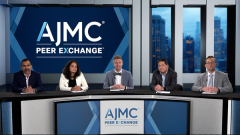
This episode, "CASPIAN and IMpower133: Comparing Frontline Trials in Extensive-Stage SCLC," features the panel walking through the two trials that put checkpoint inhibitors on the map in this setting.
The panel walks through the two pivotal trials that established checkpoint inhibitors as frontline therapy in extensive-stage small cell lung cancer. The first, a randomized phase 3 trial with three arms, compared a platinum-etoposide chemotherapy backbone alone against that same backbone plus durvalumab, and against the backbone plus both durvalumab and tremelimumab. Adding durvalumab significantly improved median overall survival, from roughly 10.3 to 13 months, a difference the panel describes as modest-sounding but clinically meaningful given the field's history. Progression-free survival did not improve significantly, and adding the second immunotherapy agent, tremelimumab, provided no additional benefit over durvalumab alone.
A second global, randomized, double-blind trial evaluated atezolizumab, pairing platinum-etoposide induction with either atezolizumab or placebo maintenance after four induction cycles. As with the durvalumab trial, progression-free survival differences were modest, but overall survival improved by about two months, supporting FDA approval back in 2019. The panel recalls how significant that approval felt at the time, arriving after a long run of negative trials in this setting, even though the absolute benefit was small.
The episode closes on a practical comparison: the two trials allowed different chemotherapy backbones, one permitting a choice between carboplatin and cisplatin with either four or six cycles, the other built specifically around carboplatin-etoposide. The panel explains why this flexibility matters clinically, noting that having options in platinum choice and cycle number, along with differences in dosing schedules between the two immunotherapy agents, can simplify workflows for nursing, pharmacy, and prior authorization, particularly in community-based practices managing a high volume of patients.
In "CASPIAN at Three Years: Long-Term Survival in Extensive-Stage SCLC," the panel revisits one of these trials with a longer-term survival update.
Advertisement
Related to this article

UAB experts said new bladder cancer, myeloma, and lung cancer therapies are changing care, but access and costs remain barriers.

At an AJMC® Stakeholder Interchange in New York, New York, leukemia specialists agreed that menin inhibitors fill a real gap in relapsed/refractory acute myeloid leukemia, but said that slow molecular testing, formulary rules, and thin community infrastructure still determine which patients get them and how fast.

Adults with moderately to severely active Crohn disease can now start risankizumab with an on-body injector at home.

For all the advances in breast cancer, there remains unmet need for patients whose cancer progresses after treatment with antibody-drug conjugates (ADCs). In the final week of Breast Cancer Awareness Month, AJMC® looks at an investigational vaccine approach that could come after ADCs, offering patients a low-toxicity regimen.
Advertisement
Advertisement
Trending on AJMC
1
Medicare Plan Terminations Hit 4.3 Million as Part D Market Shrinks
2
Higher Ropeginterferon Alfa-2b Exposure Liked to JAK2 Reductions in ET
3
Menin Inhibitors in AML: In NYC, Experts Map the Path From Academic Centers to Community Care
4
Youths With Depression Face Higher Odds of Prescription Drug Misuse
5