
Opinion|Videos|November 18, 2026
Maintenance Therapy Options in Extensive-Stage SCLC
Maintenance therapy in extensive-stage disease now spans more than one immunotherapy backbone, but added efficacy arrives paired with added toxicity and cost, a trade-off that demands careful patient selection.
Advertisement
Episodes in this series
"Maintenance Therapy Options in Extensive-Stage SCLC" turns to what happens after induction ends, when treatment shifts to a lighter, longer-term phase.
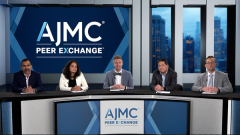
This episode turns to the maintenance phase of treatment for extensive-stage small cell lung cancer, following induction chemoimmunotherapy. The panel draws a parallel to non-squamous non-small cell lung cancer, where an intense induction phase gives way to a lighter maintenance regimen, noting that similar precedent exists here, though small cell lung cancer patients often struggle more with induction itself, meaning not everyone remains fit enough to continue onto every available maintenance option.
Currently, one FDA-approved maintenance regimen pairs lurbinectedin with atezolizumab, though the panel acknowledges this combination is not always practical or feasible for every patient. Additional maintenance options are emerging, including data suggesting a survival benefit when tarlatamab is added to durvalumab maintenance, based on a press release describing positive results from a study evaluating this combination. The panel welcomes this expanding menu of maintenance choices, noting that clinicians are not confined to a single immunotherapy backbone and that real-world data on mixing and matching these newer agents with either checkpoint inhibitor will be important as adoption grows.
The conversation then turns to trade-offs. The lurbinectedin-atezolizumab maintenance data showed meaningful improvements in both progression-free and overall survival, on the order of two to three months, but that benefit came paired with an increased rate of adverse events, and an increased rate of severe, grade 3 or 4 adverse events, and a two- to three-fold increase in cost. The panel stresses that patient selection is critical given this trade-off: appropriate candidates typically have strong performance status, no cranial metastases, favorable blood counts, growth factor support available, and reliable caregiver support, since the regimen is demanding both clinically and financially for patients and practices alike.
The next episode, "Patient Factors and Access Barriers in Extensive-Stage SCLC," examines the patient factors and access barriers that shape treatment beyond the data alone.
Advertisement
Related to this article

In this Q&A, Jesús Corral Jaime, MD, discusses real-world CEMI-LUNG data on cemiplimab in advanced NSCLC presented at the ESMO 2026 Congress.

Neladalkib earned accelerated approval for previously treated ALK-positive NSCLC, with ORRs of 49% and 32%.

Non-US-born adults had higher CRC screening nonadherence than US-born adults, particularly those with less than 15 years of US residence.

The once weekly self-injected treatment is the first dual-binding nanobody C5 inhibitor approved for adults with AChR antibody-positive gMG.

Merck has begun the phase 3 ENHANCE-3 trial testing whether ensifentrine added to standard of care prevents COPD exacerbations in high-risk adults.

Non-CF bronchiectasis prevalence rose across commercial, Medicare, and Medicaid plans from 2016 to 2024, while incidence stayed relatively stable.

Shorter telomere length was linked to a usual interstitial pneumonia pattern (UIP) on CT in patients with ILD, per research presented at CHEST 2026.

Low awareness that fatty liver can silently progress and that MASH fibrosis is treatable drives missed follow-up testing, says Rohit Loomba, MD.
Advertisement
Advertisement
Trending on AJMC
1
FDA Approves Dexmedetomidine Sublingual Film as At-Home Agitation Therapy
2
GLP-1s Alone Won't Solve Obesity, JAMA Summit Report Says
3
Ribupatide Yields Up to 17.7% Weight Loss in Phase 3 GEMINI-1 Trial
4
FDA Grants Accelerated Approval to Neladalkib for Previously Treated ALK-Positive NSCLC
5