
Opinion|Videos|November 4, 2026
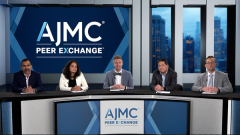
How CASPIAN and IMpower133 Inform Treatment Decisions in Extensive-Stage SCLC
With comparable survival benefits and overlapping trial populations, choosing between two frontline immunotherapy regimens increasingly comes down to chemotherapy backbone flexibility and one drug's added indication across both disease stages.
Advertisement
Episodes in this series
"How CASPIAN and IMpower133 Inform Treatment Decisions in Extensive-Stage SCLC" asks a practical question: when two trials look similar on paper, what actually tips the scale in clinic?
With two pivotal trials now on the table, this episode tackles a practical question: how much should the differences between them actually influence which frontline immunotherapy a clinician chooses for extensive-stage small cell lung cancer? The panel's honest answer is that the differences are real but modest. Both trials showed similar improvements in median overall survival compared with chemotherapy alone, and while one trial's numerical survival advantage was slightly higher, the panel does not consider that gap large enough to be decisive on its own.
More interesting to the panel is why one trial failed to show a significant progression-free survival benefit, a result attributed not to the immunotherapy arm underperforming, but to the control arm performing better than expected, potentially influenced by trial design choices such as allowing four to six cycles of chemotherapy and permitting prophylactic cranial irradiation. This kind of granular, design-level comparison, rather than a simple hazard-ratio scoreboard, is what the panel considers essential when interpreting cross-trial data, along with attention to how comparable the enrolled populations actually were.
The episode closes on a factor that does meaningfully affect decision-making: one of the two immunotherapy agents carries an indication in both limited-stage and extensive-stage disease, while the other is approved only in extensive-stage disease. For practices that value using a single immunotherapy drug across a patient's treatment journey, or that want simplicity in chemotherapy ordering systems, that broader indication can be a genuine, practical tiebreaker, even when the underlying efficacy data between the two regimens looks largely comparable.
Our next episode, "Brain Metastases and Cranial Radiation in Extensive-Stage SCLC," turns to a complication that touches nearly every extensive-stage discussion: brain metastases.
Advertisement
Related to this article

Pharmacists outline new oncologic therapeutics, from pancreatic cancer to myeloma, and what high prices and crowded markets mean for payers.

Invivyd presented preclinical IDWeek 2026 data on VMS063, an investigational antibody that neutralized B3 and D8 measles variants in vitro.

Sphingolipid profiles in plasma and breath condensate differed between IPF and f-HP and tracked with disease severity, CHEST 2026 data show.

The FDA granted accelerated approval to the first plasmid DNA-based immunotherapy for adults with recurrent respiratory papillomatosis (RRP).

October's FDA approvals included the introduction of 5 non-oncology treatment options across specialties.

A phase 4 study found 69% of patients with OAB were consistently satisfied with vibegron at 12 months, with exploratory persistence of 59.8%.

Initial frontal fibrosing alopecia treatment was largely similar in Black and White patients, though tetracycline use was higher in Black patients.
Advertisement
Advertisement
Trending on AJMC
1
Unanswered Questions in First- and Second-Line mCRC Care
2
First-Line Vitiligo Treatment: Topical JAK Inhibitors and Phototherapy
3
Precision Drugs Meet Payer Realities
4
Cleveland Clinicians Say Obesity Care Starts Too Late for Many Patients
5