
Opinion|Videos|November 4, 2026
CASPIAN at Three Years: Long-Term Survival in Extensive-Stage SCLC
Three-year survival data gives patients something rare in extensive-stage disease: a concrete number to hold onto. Nearly one in five patients alive at three years reframes what a durable tail of the curve can mean.
Advertisement
Episodes in this series
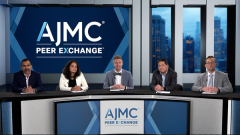
In "CASPIAN at Three Years: Long-Term Survival in Extensive-Stage SCLC," the panel returns to the data with a longer follow-up view that changes how survival gets discussed with patients.
This episode focuses on a three-year overall survival update from the durvalumab trial in extensive-stage small cell lung cancer, and why that longer-term data point matters so much to both clinicians and patients. The panel frames long-term survival results as the single piece of data that patients and families care about most when facing a first-line metastatic lung cancer diagnosis, since it speaks directly to the question every patient eventually asks: how long, realistically, might I live?
The update showed that between 15% and 20% of patients treated with durvalumab plus chemotherapy remained alive at three years, a result the panel characterizes as a genuinely solid tail of the survival curve for any metastatic lung cancer dataset, small cell or non-small cell. That range translates, in practical counseling terms, to nearly a one-in-five chance of three-year survival, a number the panel finds far more tangible and motivating for patients than a median survival figure alone.
The conversation turns to how this shapes clinic conversations. While median survival remains part of most discussions, the panel notes that patients often want to hear about best-case scenarios as much as, or more than, the average expectation, and three-year survival data gives clinicians a concrete, evidence-based number to offer alongside median outcomes. The episode closes by reinforcing that longer follow-up data of this kind, showing not just whether a treatment works initially but how durable that benefit proves to be over years, is exactly the type of evidence clinicians want more of as they counsel patients through a difficult diagnosis and help them understand what realistic long-term outcomes might look like.
The next episode, "How CASPIAN and IMpower133 Inform Treatment Decisions in Extensive-Stage SCLC," puts both pivotal trials side by side to weigh how they should inform regimen choice.
Advertisement
Related to this article

Pharmacists outline new oncologic therapeutics, from pancreatic cancer to myeloma, and what high prices and crowded markets mean for payers.

Invivyd presented preclinical IDWeek 2026 data on VMS063, an investigational antibody that neutralized B3 and D8 measles variants in vitro.

Sphingolipid profiles in plasma and breath condensate differed between IPF and f-HP and tracked with disease severity, CHEST 2026 data show.

The FDA granted accelerated approval to the first plasmid DNA-based immunotherapy for adults with recurrent respiratory papillomatosis (RRP).

October's FDA approvals included the introduction of 5 non-oncology treatment options across specialties.

A phase 4 study found 69% of patients with OAB were consistently satisfied with vibegron at 12 months, with exploratory persistence of 59.8%.

Initial frontal fibrosing alopecia treatment was largely similar in Black and White patients, though tetracycline use was higher in Black patients.
Advertisement
Advertisement
Trending on AJMC
1
Unanswered Questions in First- and Second-Line mCRC Care
2
First-Line Vitiligo Treatment: Topical JAK Inhibitors and Phototherapy
3
Precision Drugs Meet Payer Realities
4
Cleveland Clinicians Say Obesity Care Starts Too Late for Many Patients
5