
Opinion|Videos|October 21, 2026
Patient and Practice-Level Barriers in Limited-Stage SCLC Care
Logistics, not efficacy, often decide who completes limited-stage treatment. Distance from infusion centers, caregiver support, and clinic workflows can matter as much as the medicine itself in determining outcomes.
Advertisement
Episodes in this series
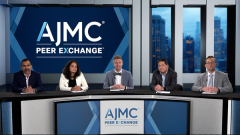
This episode, "Patient and Practice-Level Barriers in Limited-Stage SCLC Care," turns from clinical decision-making to the everyday logistics that can make or break treatment completion.
This episode extends the conversation about barriers to consolidation immunotherapy in limited-stage small cell lung cancer, shifting focus from clinical decision-making to the logistical realities patients face. Distance from treatment centers surfaces repeatedly as a practical obstacle: patients who live far from a facility may need temporary housing to complete daily radiation, and the same distance becomes a burden again once monthly durvalumab infusions begin. The panel describes patients who, after a few cycles, find the travel unsustainable, prompting efforts to connect them with more local infusion options or to space out follow-up visits, such as scans every three months instead of more frequently, to reduce the overall burden.
The discussion broadens to acknowledge that support resources exist to help patients manage these challenges, even though they cannot fully eliminate them. Beyond patient-facing barriers, the panel turns to what physicians and practices can do differently. Rather than relying on individual clinicians to remember to order consolidation therapy as a separate step, building it directly into treatment pathways, order sets, and electronic medical record workflows is proposed as a systems-level fix. Embedding consolidation immunotherapy into the default care pathway, rather than treating it as an optional add-on that depends on memory, is framed as a way to make the right next step the easy next step.
The episode closes by tying these systems-based solutions back to the broader theme of the series: that closing the gap between trial efficacy and real-world uptake requires attention not just to individual patient circumstances, but to the infrastructure and defaults that shape everyday clinical decision-making across a practice.
The next episode, "Limited-Stage SCLC: Unmet Needs and Emerging Biomarkers," has the panel taking stock of what still remains unresolved in limited-stage disease.
Advertisement
Related to this article

Insmed’s once-daily TPIP prodrug shows sustained lung vasodilation in PAH and PH-ILD, improving walk distance, PALM outcomes, and quality of life.

ASPEN links green sputum to neutrophils and exacerbations; brensocatib (DPP1) lowers purulence, while meta-analysis supports fewer flare-ups in bronchiectasis.

Experts at CHEST 2026 urge pulmonologists to keep lung cancer in mind for younger patients who never smoked, to order screening and biomarker testing themselves, and to advocate for patients' access to care.

Phentolamine 0.75% (Ryzumvi) won FDA approval for presbyopia based on the phase 3 VEGA-2 and VEGA-3 trials.

Satralizumab, a first-in-class IL-6 receptor inhibitor, was approved for adults with thyroid eye disease based on the phase 3 SatraGO program.

A higher PNR is associated with lower odds of MASLD and advanced liver fibrosis, but further studies are needed to validate findings.

Speakers at CHEST 2026 walked through the first CHEST guideline for non-CF adult bronchiectasis, including which preventive therapy to start first.

SaTScan detects an acute HCV outbreak cluster in California, showing the potential of automated surveillance, though real-time testing is needed.
Advertisement
Advertisement
Trending on AJMC
1
Patents, Rebates, and a Policy Patchwork Keep Inhalers Costly, Panelists Say
2
How Flatiron Health’s Network Chief Is Building the Future For (and With) Community Oncology Practices
3
Administrative Burden Keeps Clinicians From Bedside: Amy Morris, MD
4
CHEST: The Face of Lung Cancer Has Changed, but Screening, Care Have Gaps
5