
Opinion|Videos|October 27, 2026
Biologic Dosing Frequency and Real-World Persistence in Severe Asthma
Every dose is another opportunity to miss one. Real-world evidence indicates that longer biologic dosing intervals are associated with higher persistence and fewer treatment gaps.
Advertisement
Episodes in this series
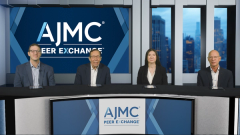
In "Biologic Dosing Frequency and Real-World Persistence in Severe Asthma," the panel weighs how dosing schedules shape whether patients stay on therapy.
Dr. Wechsler reviews the administration burden across current asthma therapies. Most controllers, including inhaled corticosteroids, long-acting beta agonists, and leukotriene modifiers, must be taken once or twice daily.
He points out that even injectable biologics with longer intervals carry a meaningful burden. He cites dupilumab, an anti-IL-4 receptor therapy, dosed every 2 weeks. Mepolizumab, an anti-IL-5 therapy, is given every 4 weeks. Omalizumab, an anti-IgE therapy, is dosed every 2 to 4 weeks. Tezepelumab, an anti-TSLP therapy, is given every 4 weeks.
Patients struggle with daily inhaler routines for many reasons, and he believes relatively frequent injections pose similar challenges. He frames the choice simply. Given the option, who would not prefer a shot every 3 or 6 months rather than every 2 weeks?
He puts numbers to it: 26 injections a year versus 2. In his view, nearly every patient would choose fewer injections. Dr. Bernstein calls that a no-brainer.
Dr. Mosnaim then addresses whether less frequent dosing changes the likelihood that patients stay on therapy. She confirms that real-world data show a clear pattern. Biologics requiring more frequent dosing have higher rates of discontinuation and more delays between doses.
She shares that some of her patients must give themselves a pep talk before every injection. Some patients are comfortable with self-injection, but others find it genuinely difficult. For these patients, frequency matters a great deal.
She reiterates that real-world evidence links longer dosing intervals with higher persistence. Patients are more likely to keep taking biologics that require fewer administrations.
Dr. Bernstein raises a related concern. A glitch in the authorization process might give patients a reason to disengage from therapy. Dr. Mosnaim agrees. She has seen patients decline to push hard for prior authorization renewal, allowing therapy to lapse altogether.
The next episode, "FDA-Approved Asthma Biologics: Mechanisms of Action and Treatment Selection," features Dr. Chupp walking through the approved biologic classes and how practical features shape the final choice.
Advertisement
Related to this article

Adults with moderately to severely active Crohn disease can now start risankizumab with an on-body injector at home.

For all the advances in breast cancer, there remains unmet need for patients whose cancer progresses after treatment with antibody-drug conjugates (ADCs). In the final week of Breast Cancer Awareness Month, AJMC® looks at an investigational vaccine approach that could come after ADCs, offering patients a low-toxicity regimen.

Hiddo Heerspink, PhD, discusses finerenone data in type 1 diabetes, FSGS and IgA nephropathy, and open questions on sequencing CKD therapies.
Advertisement
Advertisement
Trending on AJMC
1
Preparing for Hepatitis B Functional Cure: Jordan Feld, MD, MPH
2
IDWeek Studies Tie RSV, Flu, and COVID-19 to Harm After Acute Illness
3
FDA Approves Talazoparib Plus Enzalutamide for HRR-Mutated mHSPC
4
Povetacicept Cuts Proteinuria by 52% in IgA Nephropathy at Week 36
5