
Opinion|Videos|November 17, 2026
Selecting Asthma Patients for 6-Month IL-5 Dosing: Fit and Safety
Most eligible patients stand to benefit from twice-yearly dosing, though candidate selection still matters, and clinical trial data reveal no new safety signals relative to more frequently dosed agents.
Advertisement
Episodes in this series
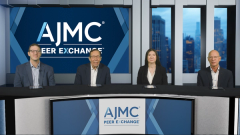
In "Selecting Asthma Patients for 6-Month IL-5 Dosing: Fit and Safety," the experts clarify who is best suited to extended-interval therapy and what the safety evidence shows.
Dr. Bernstein asks Dr. Wechsler how he decides which patients are appropriate for 6-month dosing. Dr. Wechsler emphasizes shared decision-making. The first step is choosing the class and mechanism: anti-IL-5, anti-IL-4 receptor, anti-TSLP, or anti-IgE. He calls this the fundamental question.
For most patients with type 2 inflammation, especially eosinophilic disease, no clinician would be faulted for choosing any of these strategies. Other factors then come into play. He considers asthma-specific and inflammation-specific features, patient-related factors, and comorbidities. For example, a patient with atopic dermatitis might receive a different biologic than one with chronic sinusitis.
Patient-related factors include whether dosing happens at home or in the office, and whether it occurs every 2, 4, or 8 weeks or every 6 months. These questions matter for busy patients, frequent travelers, and those who struggle to reach the office monthly.
He also identifies patients who may not be good candidates. Those who frequently miss appointments risk losing control if they fail to show for a twice-yearly dose. Considerations, he concludes, span disease, patient, and lifestyle.
Dr. Bernstein then asks Dr. Mosnaim about safety data for longer-acting, depot-style IL-5 inhibition. She served as a site principal investigator in the depemokimab clinical trials.
She reports that the side effect profile is well balanced. There were no concerning or increased safety signals with every-6-month dosing compared with more frequently administered anti-IL-5 therapies. She finds that very reassuring.
She notes there was no concern about anaphylaxis, which has been seen very rarely with some other biologics. Her practice manages more than 500 patients on biologics. Speaking only from personal experience, she has never seen anaphylaxis with an anti-IL-5 agent. Another panelist indicates a similar experience in his own practice.
The panel closes with "The Future of Severe Asthma Care: Precision Medicine and Beyond," as Dr. Chupp, Dr. Wechsler, and Dr. Mosnaim reflect on how far severe asthma care has come and what lies ahead.
Advertisement
Related to this article

Non-US-born adults had higher CRC screening nonadherence than US-born adults, particularly those with less than 15 years of US residence.

The once weekly self-injected treatment is the first dual-binding nanobody C5 inhibitor approved for adults with AChR antibody-positive gMG.

Merck has begun the phase 3 ENHANCE-3 trial testing whether ensifentrine added to standard of care prevents COPD exacerbations in high-risk adults.

Non-CF bronchiectasis prevalence rose across commercial, Medicare, and Medicaid plans from 2016 to 2024, while incidence stayed relatively stable.

Shorter telomere length was linked to a usual interstitial pneumonia pattern (UIP) on CT in patients with ILD, per research presented at CHEST 2026.

Low awareness that fatty liver can silently progress and that MASH fibrosis is treatable drives missed follow-up testing, says Rohit Loomba, MD.

The FDA approved asundexian (Sunharbo) with antiplatelet therapy to reduce recurrent stroke risk after noncardioembolic stroke or high-risk TIA.
Advertisement
Advertisement
Trending on AJMC
1
FDA Approves Dexmedetomidine Sublingual Film as At-Home Agitation Therapy
2
ObesityWeek 2026: Studies Map GLP-1 Access Gaps, Obesity's Costs
3
FDA Approves Weekly Gefurulimab for Generalized Myasthenia Gravis
4
Nondrug Therapies Ease Cough in Lung Cancer, Pulmonary Rehab Leads Pack
5