
Opinion|Videos|November 10, 2026
Payer Coverage and Authorization for Severe Asthma Biologics
Payer acceptance of asthma biologics has improved considerably, yet coverage still varies widely by health system, and plans can override a treatment choice reached through shared decision-making.
Advertisement
Episodes in this series
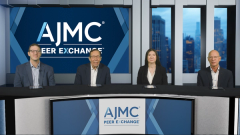
This episode, "Payer Coverage and Authorization for Severe Asthma Biologics," features the panel comparing their experiences securing coverage, from routine approvals to formulary redirection.
Dr. Bernstein asks Dr. Wechsler about working with payers. Dr. Wechsler believes the prior authorization burden has lessened over time. Payers now recognize the value of biologics in preventing exacerbations, emergency visits, and hospitalizations.
Providers are also more comfortable prescribing than they were 20 years ago, when the first biologic arrived.
His interactions with payers have been generally positive. His team rarely needs to appeal, provided documentation is thorough. That means confirming standard-of-care therapy, poor control, the number of exacerbations, and any prednisone use.
Required step edits, where one therapy must be tried before another, have become much less common. He credits both the growing number of therapies and physicians' improving ability to match the right drug to the right patient at the right time.
Dr. Mosnaim offers a contrasting view. If you have seen one US health care system, she says, you have seen one health care system. Where she practices, she often receives letters denying the biologic that she and the patient selected together. The payer instead lists alternative biologics it would consider. She must then return to the patient, explain the denial, and discuss whether to pursue another option.
Dr. Bernstein asks whether switching a stable patient from a monthly biologic to a 6-month agent might meet resistance. Dr. Wechsler says much depends on each payer's cost for each therapy. He believes payers should recognize that longer intervals improve adherence and thereby prevent exacerbations.
He has not seen denials for such switches so far. The switch still requires shared decision-making, and it may be initiated by the patient or by a provider who recognizes suboptimal adherence.
Dr. Chupp reports a similar experience. Approval has resembled that of other biologics, with only a few denials. Dr. Bernstein concludes, "We shall see."
In "Choosing an IL-5 Inhibitor for Asthma: Evidence, Comorbidities, Convenience," Dr. Chupp lays out his stepwise approach to choosing among IL-5 agents, and Dr. Wechsler and Dr. Mosnaim explain how logistics shape the decision.
Advertisement
Related to this article

The FDA granted accelerated approval to amivantamab and hyaluronidase for previously treated recurrent or metastatic head and neck cancer.

A systematic review and meta-analysis found GLP-1 RAs improved liver and metabolic markers in MASLD and MASH, but long-term benefits remain unproven.

Mailed fecal immunochemical test (FIT) outreach raised CRC screening at federally qualified health centers, but gains faded by year 3.

SIRVA was rare after COVID-19 and flu shots, but COVID-19 vaccination had about 7 more cases per 100,000 doses in a study of 1.8 million.

Mucus plugs on chest CT may signal higher COPD hospitalization and death risk even without cough, and early data suggest they can be treated.
Advertisement
Advertisement
Trending on AJMC
1
Survodutide Meets CV Safety End Point in SYNCHRONIZE-CVOT
2
FDA Approves First Dual-Targeted Therapy for Advanced HNSCC
3
Pharmacy, Claims Data Show High Resmetirom Persistence in MASH
4
Phase 3 Data Back ALP Normalization as Treatment Goal in PBC
5