

A multimodal AI approach could highlight areas in the brain that were associated with cognitive worsening in patients with MS.
A multimodal AI approach could highlight areas in the brain that were associated with cognitive worsening in patients with MS.

OCM showed no increased likelihood of starting systemic therapy in patients with newly diagnosed cancers, despite gains in poor-prognosis cases.

A case study shows positive outcomes following allogeneic stem cell transplantation in a patient with highly refractory MM and therapy-related MDS/AML.
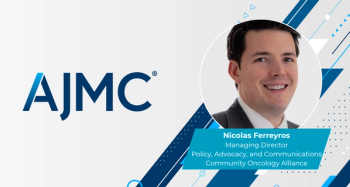
Community oncology delivers top-tier cancer care close to home, said Nicolas Ferreyros, COA, championing research, advocacy, and innovation to prove it.
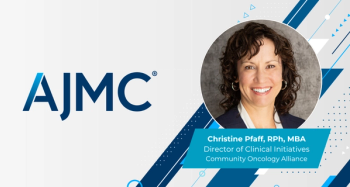
COA’s Christine Pfaff, RPh, MBA, highlights clinical and operational innovation, AI adoption, and practice-sharing as keys to advancing community oncology care.

The ECHO study raises timely questions about whether managed care coverage policies have kept pace with evolving evidence.

The weekly anifrolumab autoinjector for systemic lupus erythematosus enables at-home use and improves convenience on top of standard therapy.

RSV vaccines and nirsevimab are linked to reduced infant hospitalizations, though seasonal spikes and data limitations remain concerns.

MASH cirrhosis carries high risks of death, decompensation, and liver cancer—especially with type 2 diabetes—while predictive tools remain limited.

Psoriasis carries significant psychological and social burden, but adding mind-body approaches like CBT to treatment may improve mental health and outcomes.

The COA Community Oncology Conference will tackle AI, the rollout of bispecifics and CAR T in the community setting, plus reimbursement, radiation oncology, and patient access strategies.

Deuruxolitinib shows consistent efficacy across subgroups and drives early hair regrowth in severe alopecia areata, with gains seen by 8 weeks.

Many MASH cirrhosis trials use histologic endpoints, but a new review finds limited standardization of these outcomes across studies.

Chimeric antigen receptor-based immunotherapies show promise when directed at viral targets, but data are limited.

The benefits of exercise are particularly notable for patients who are dependent upon dialysis, a new review suggests.
The proposed rule on interoperability standards and prior authorization could lead to significant change in CMS.

A French real-world study of 282 patients with CLL identified 2 distinct treatment profiles shaped by age, genetics, and logistics—not trial data alone.

Delgocitinib led to notable improvement by week 4, which may have helped improve longer-term treatment adherence.
Phase 3 TETON-1 trial shows inhaled treprostinil improves FVC in IPF, signaling a potential new antifibrotic option.

At NAACOS 2026, value-based care leaders make the case for treating payers as partners and explain what providers must see in return.

A lengthy Ways and Means Committee hearing revealed extensive Medicare system exploitation and ignited partisan debates on fixing it.

Speakers at the NAACOS Spring 2026 Conference illustrated means of using technology in value-based care to implement preventive medicine.

New reports spotlight inequities—from Black maternal mortality to 988’s youth impact—as well as rising cancer risk and gaps in food aid.

Explore 5 FAQs on CDC opioid guidelines, including dosing, tapering, monitoring, and managed care strategies to reduce overdose risk.

Coverage of our peer-reviewed research and news reporting in the health care and mainstream press.

Bispecific antibodies are delivering unprecedented response rates in multiple myeloma, offering fast, flexible options alongside CAR T-cell therapy, explains Prerna Mewawalla, MD.

Pediatric care deserts push Medicaid families into costly ED visits; learn how primary care access gaps fuel chronic issues and spending.

Mosunetuzumab, a bispecific, plus polatuzumab vedotin, an antibody-drug conjugate, deliver high response rates in relapsed MCL, potentially enabling outpatient community oncology treatment and wider patient access.

Rani Bansal, MD, explores what's driving the surge in breast cancer in young women and why earlier, risk-based screening matters.

FDA grants lunsotogene parvec-cwha approval for OTOF-related hearing loss, delivering single-dose gene therapy gains and expanding access with free US supply.